
impostors
technology used

Unreal Engine

Blender

Adobe Illustrator

Adobe Photoshop
announcement trailer
Impostors is a social deduction game in an set 80's themed mall. Players explore the mall, play minigames, and hold meetings to deduce the Impostor, who is trying to elmininate all the other players.
My work was unrelated to this game's blockchain, cryptocurrency, or NFT features. Work on the game has also continued well beyond my time spent on it.
announcement trailer
On Impostors, I wore many hats. I was primarily a level designer and environment artist, but I also did some game design, graphic design, look development, VFX, and character art while on the project.
While Impostors is not officially released, much of the game's content is publicly available thanks to closed betas.
supermall final screenshots
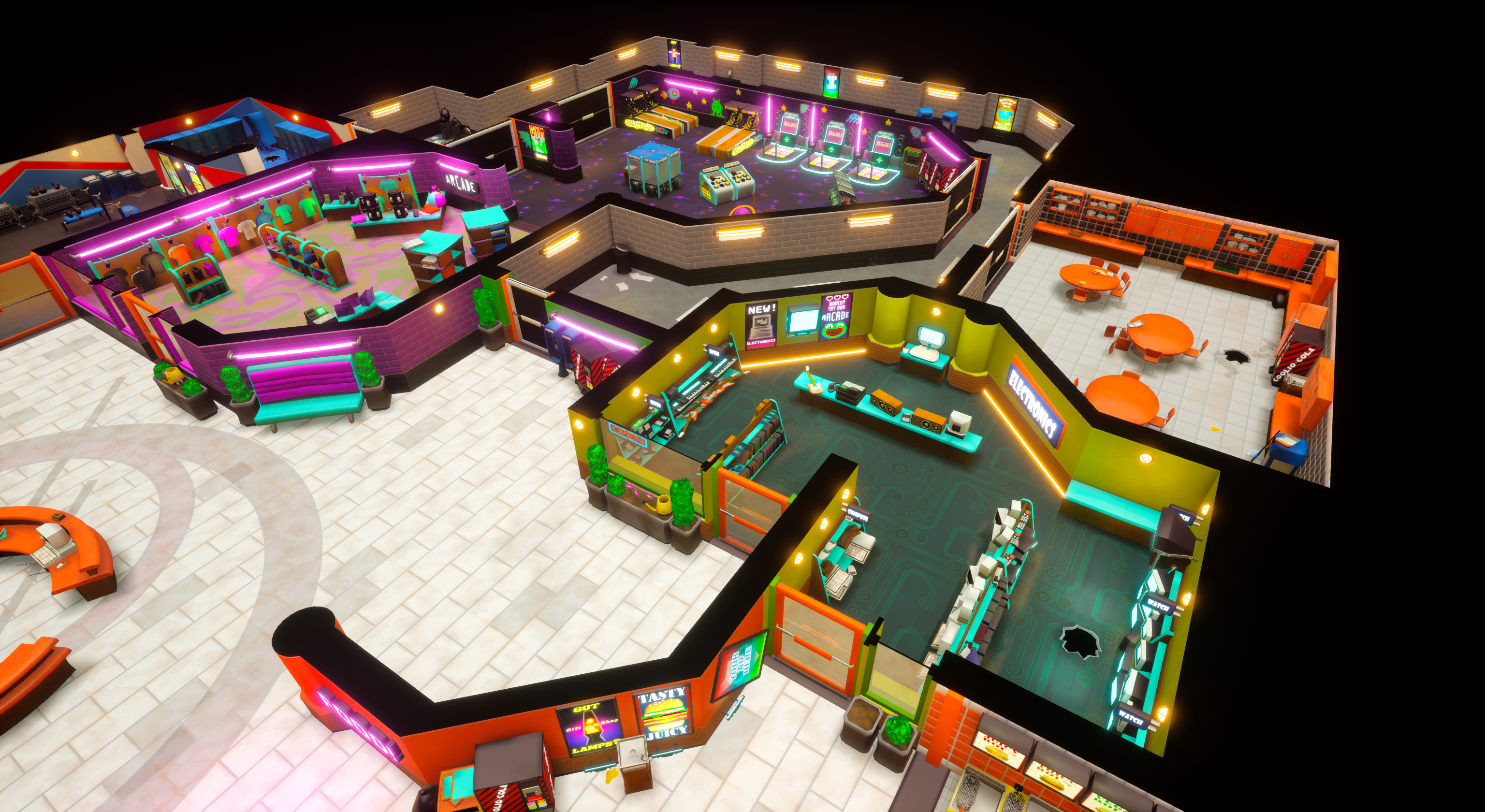
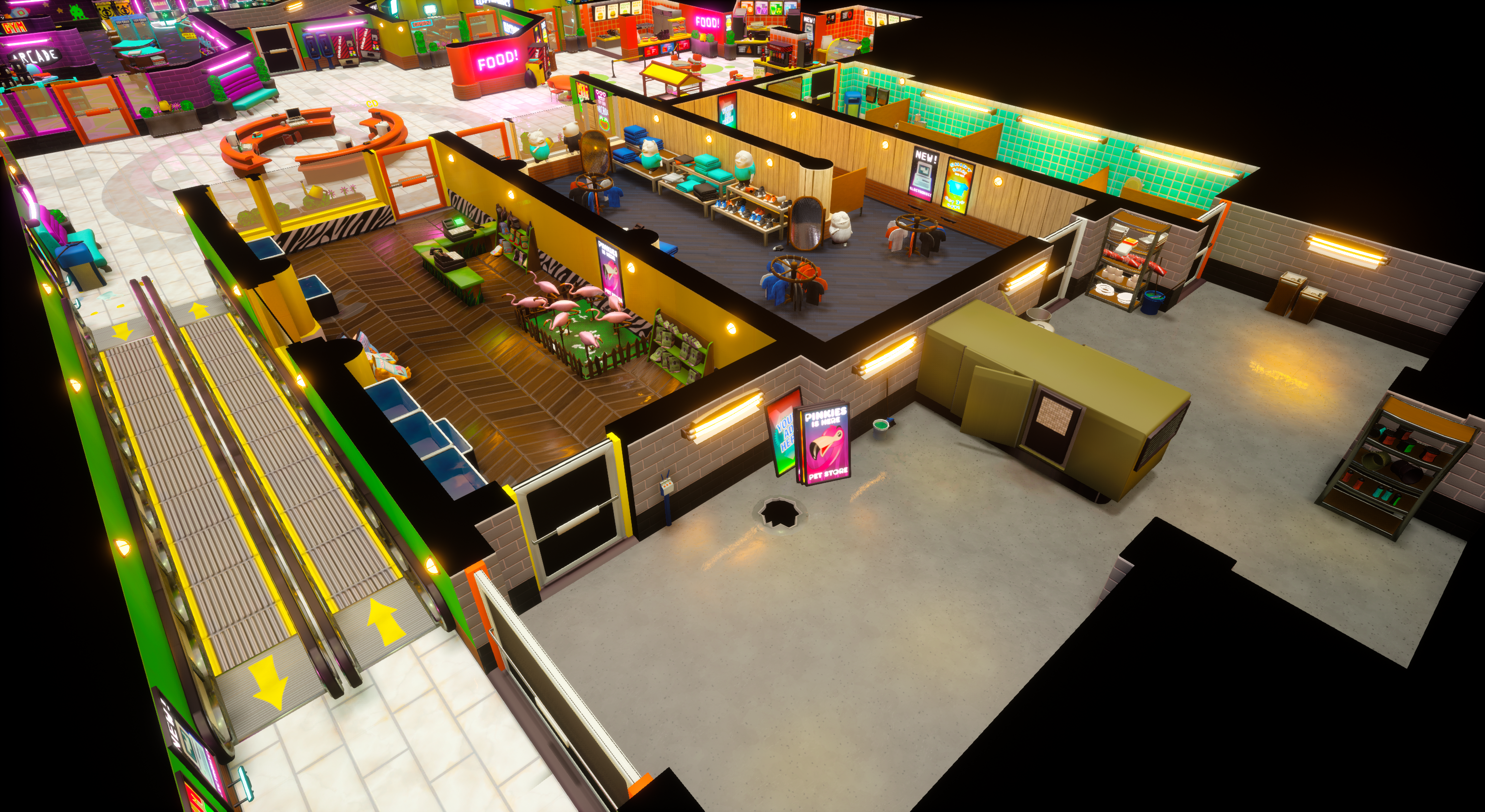
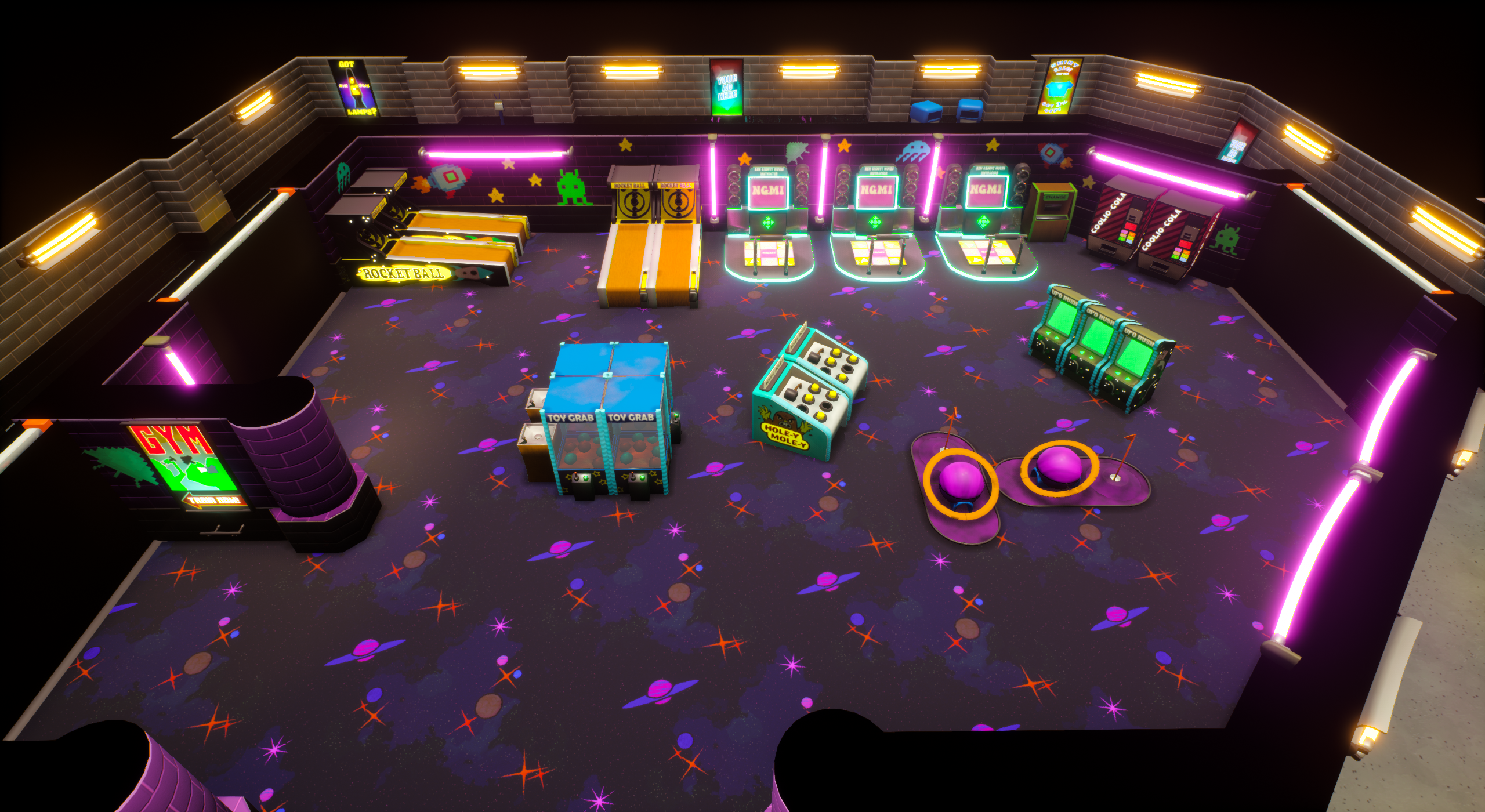
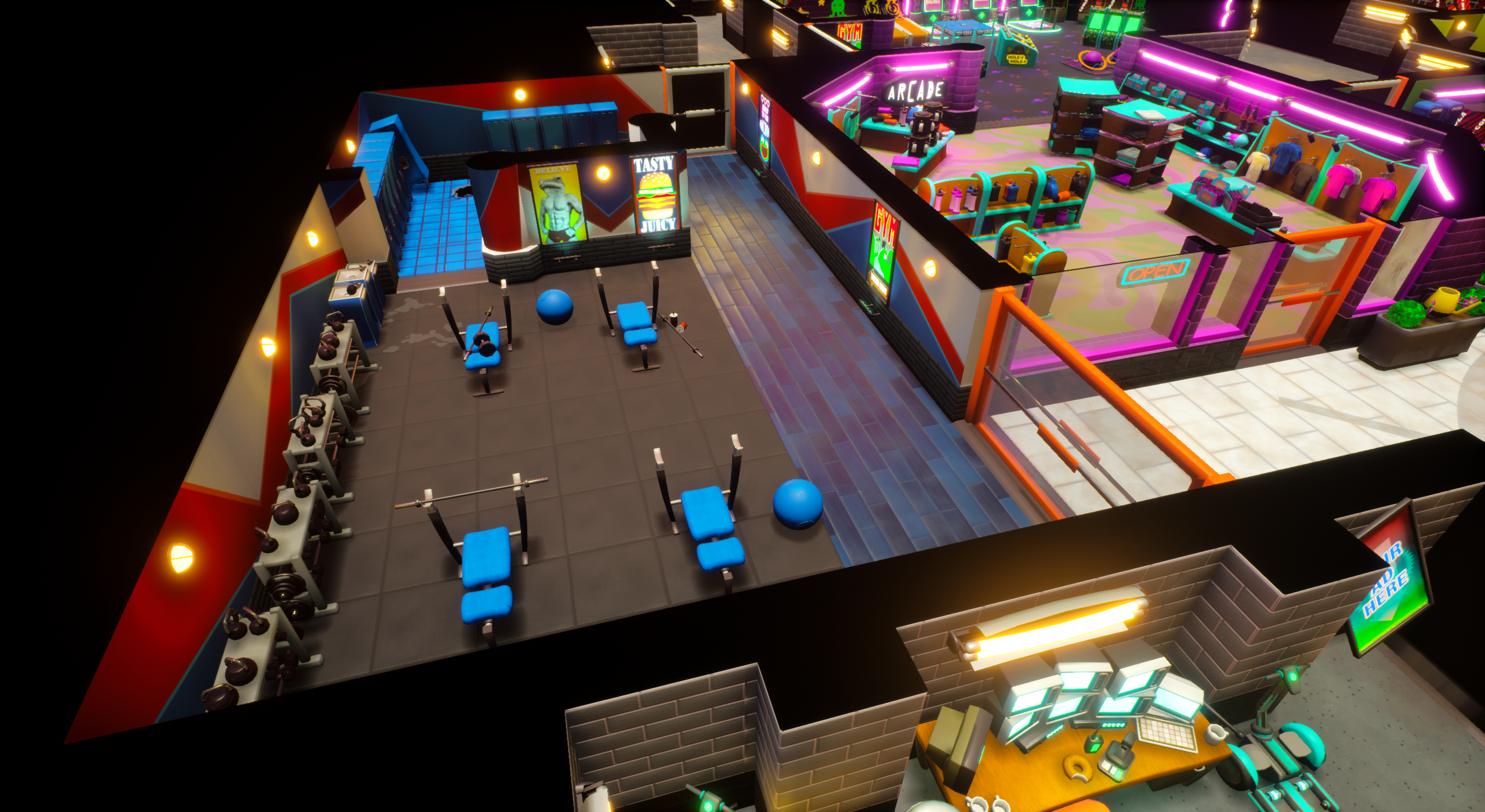
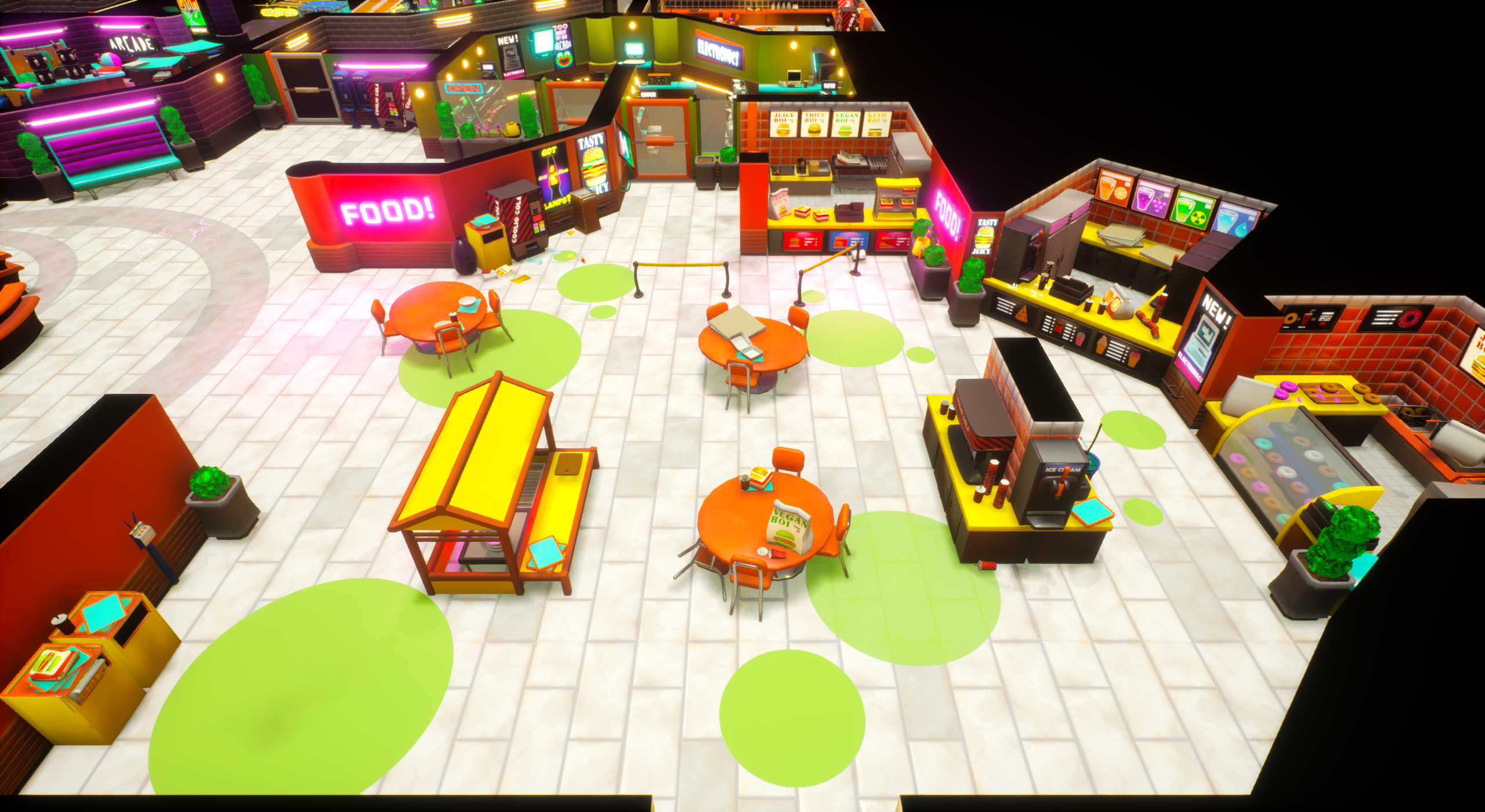
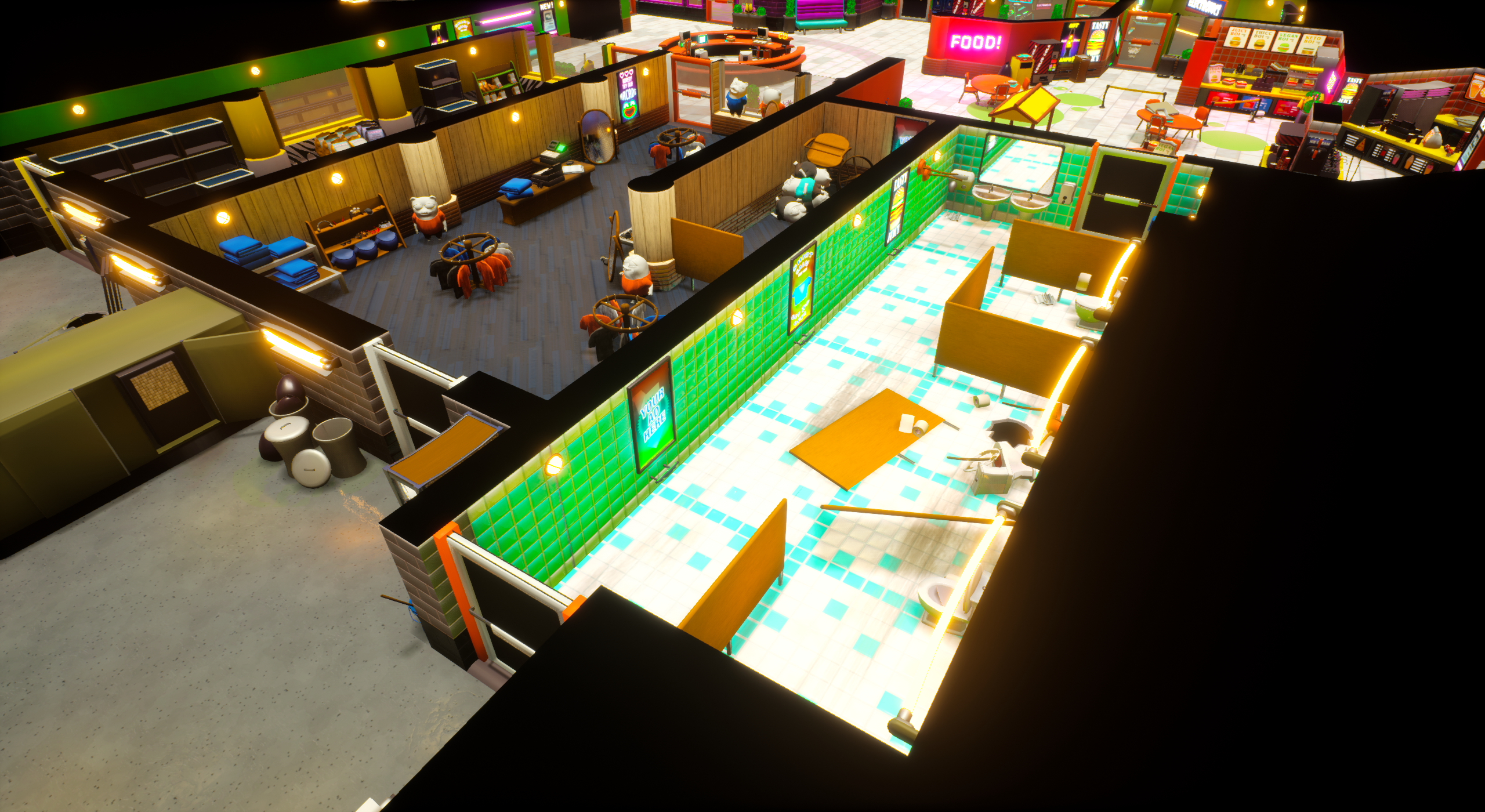
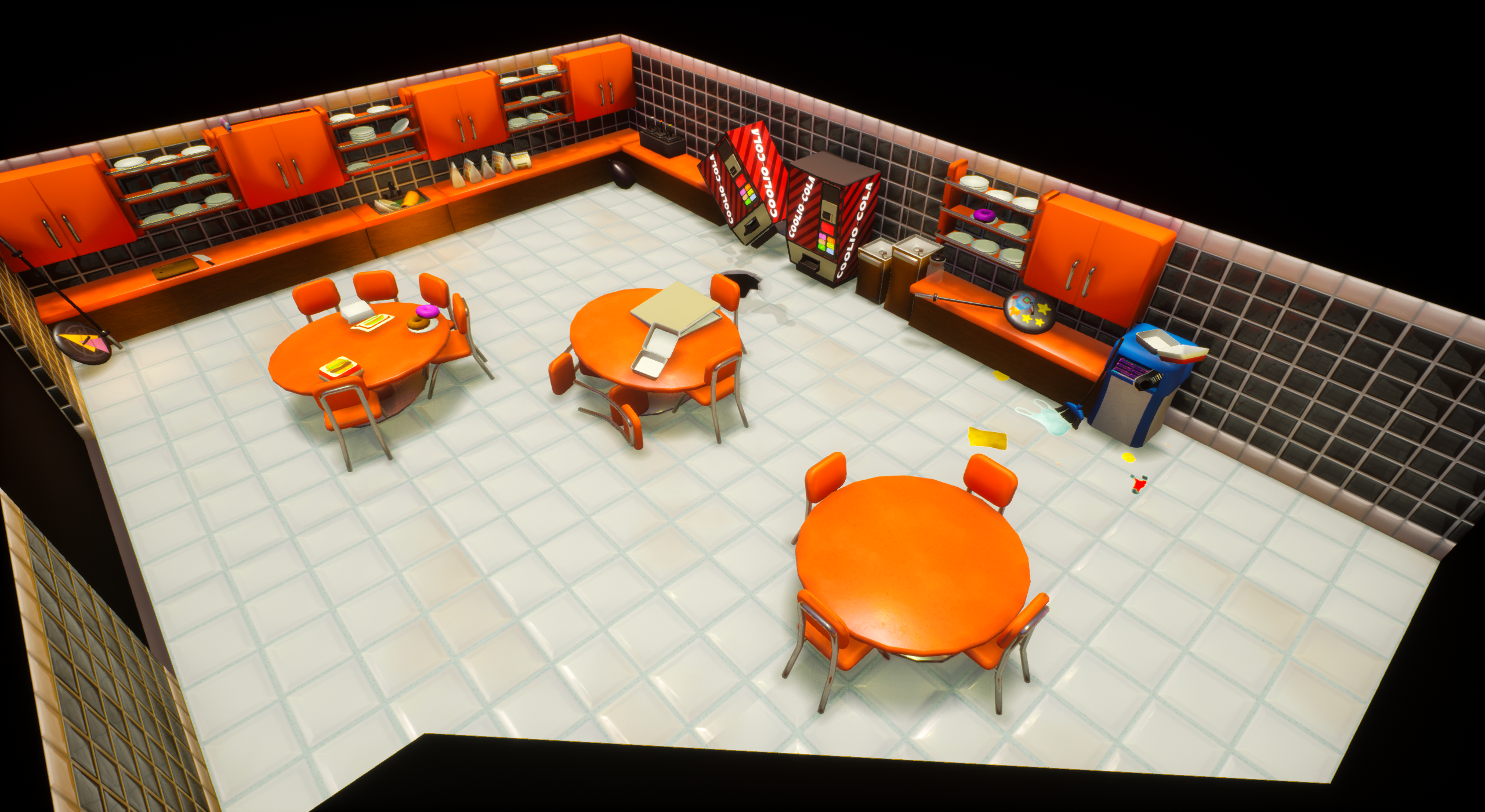
Supermall is a large map designed for 12-15 players and up to 3 Impostors. It features many rooms, secondary paths, an even distribution of minigames, and hidden tunnels to create good flow while allowing enough privacy for Impostors to kill; this made a balanced experience where any match could go either way.
For the first several months on Impostors, I was the only person working on the environment; this was a gift and a curse. I could stretch my skills and have ownership of my work, but as a junior artist, I struggled with creating a new pipeline and environments with no direction or concepts to work from.
Ultimately, all assets above are my work. I created the modular kit, materials, props, and decals seen in the environment and set dressed all spaces. I also performed extensive optimization, lighting, and post-process passes to arrive at a final appearance.
Another studio joined the project after about 10 months, and I received much-appreciated feedback and direction from their art director, which lent itself to a bright, colorful, and consistent environment, as seen above. Their artists produced the graphic design seen in the posters and menus based on my designs.
supermall sketches
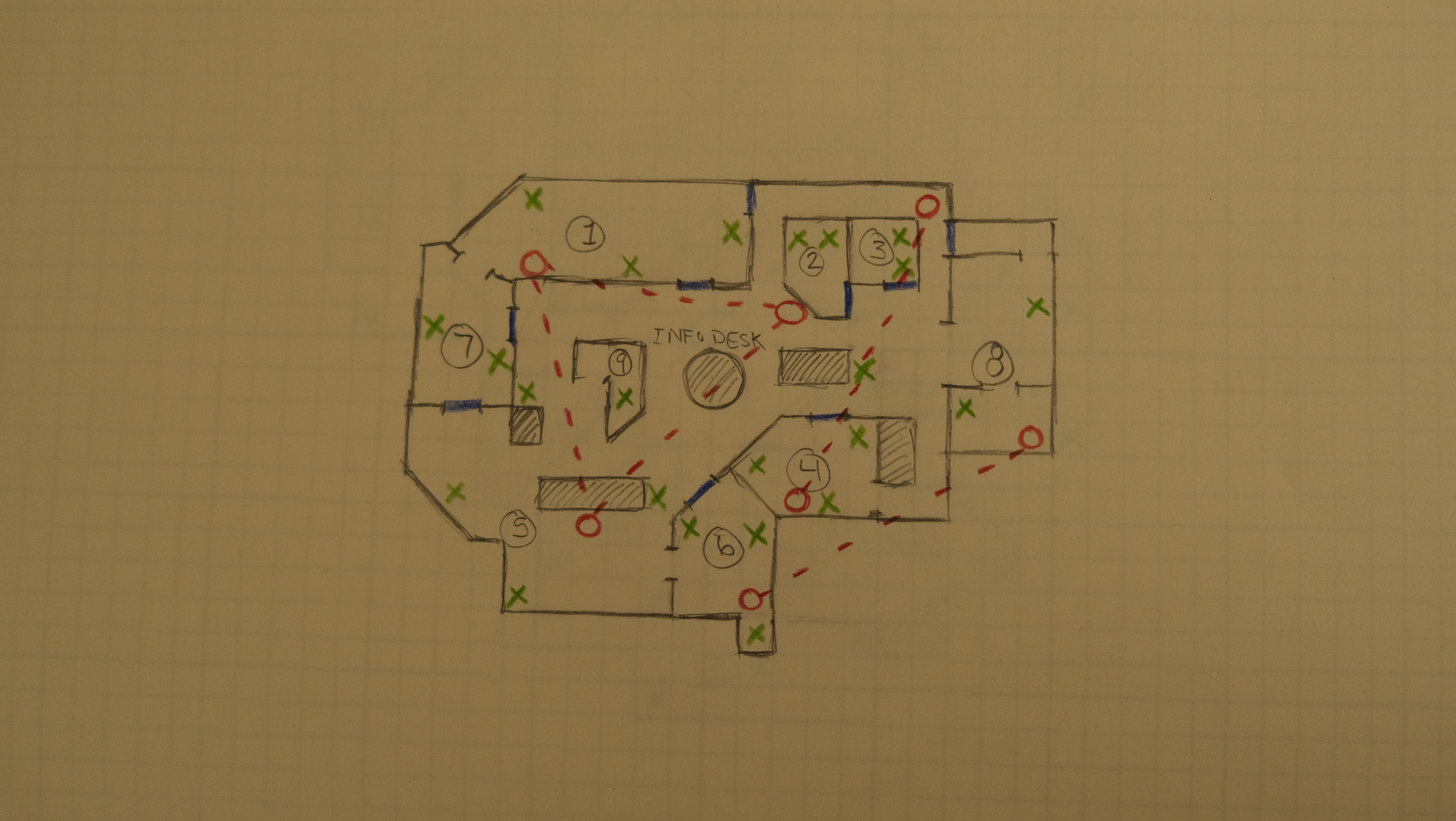
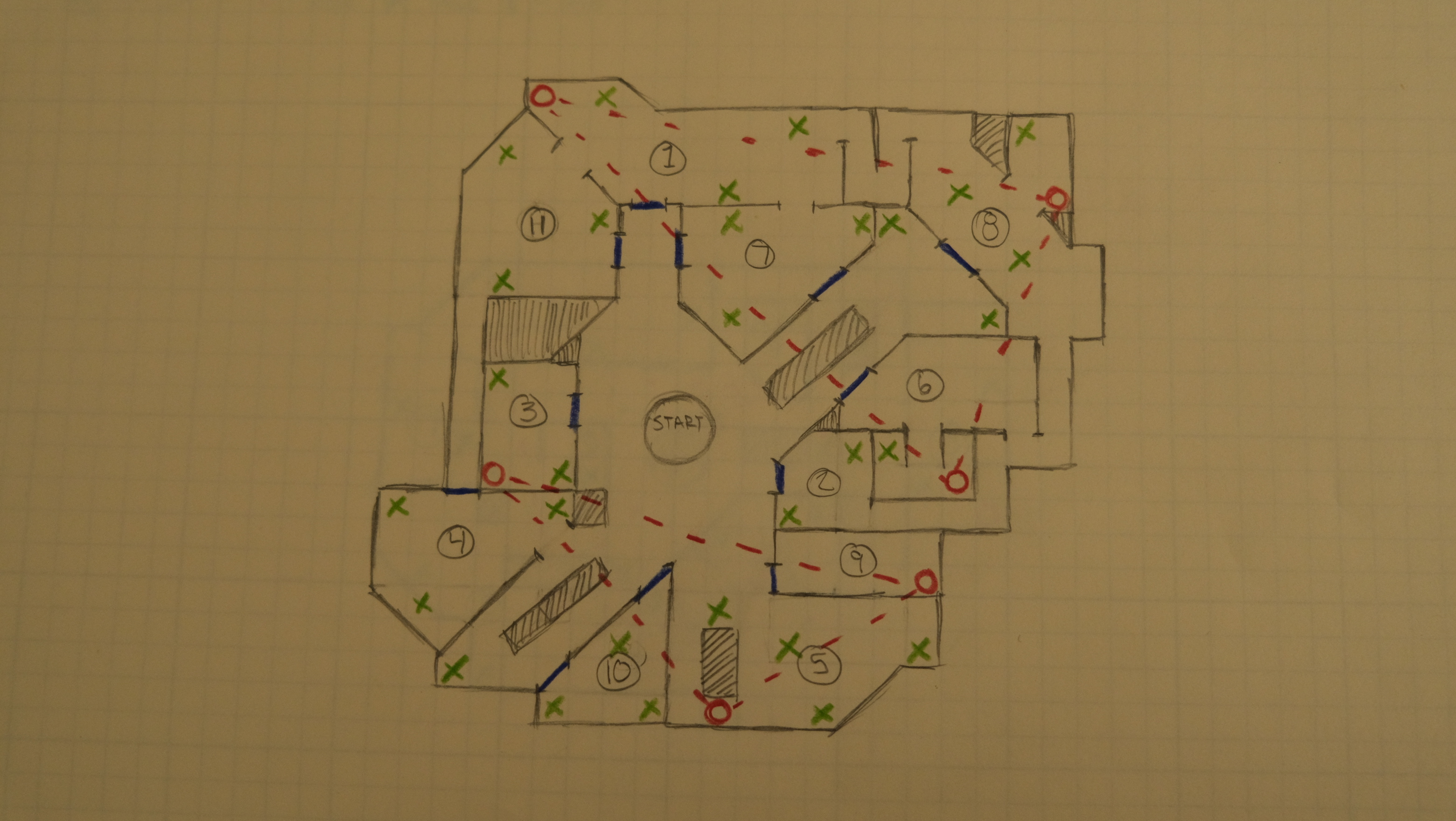
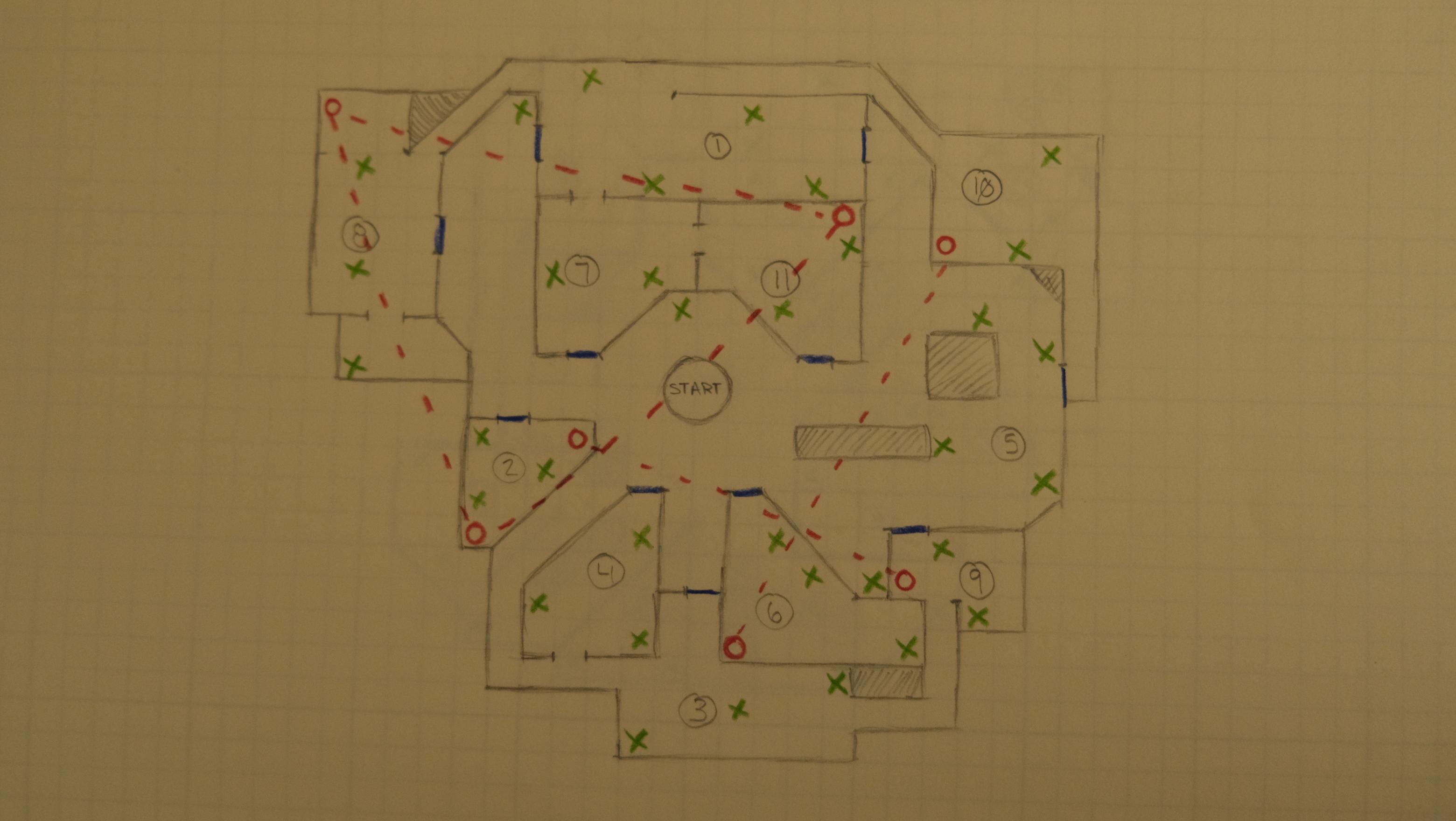
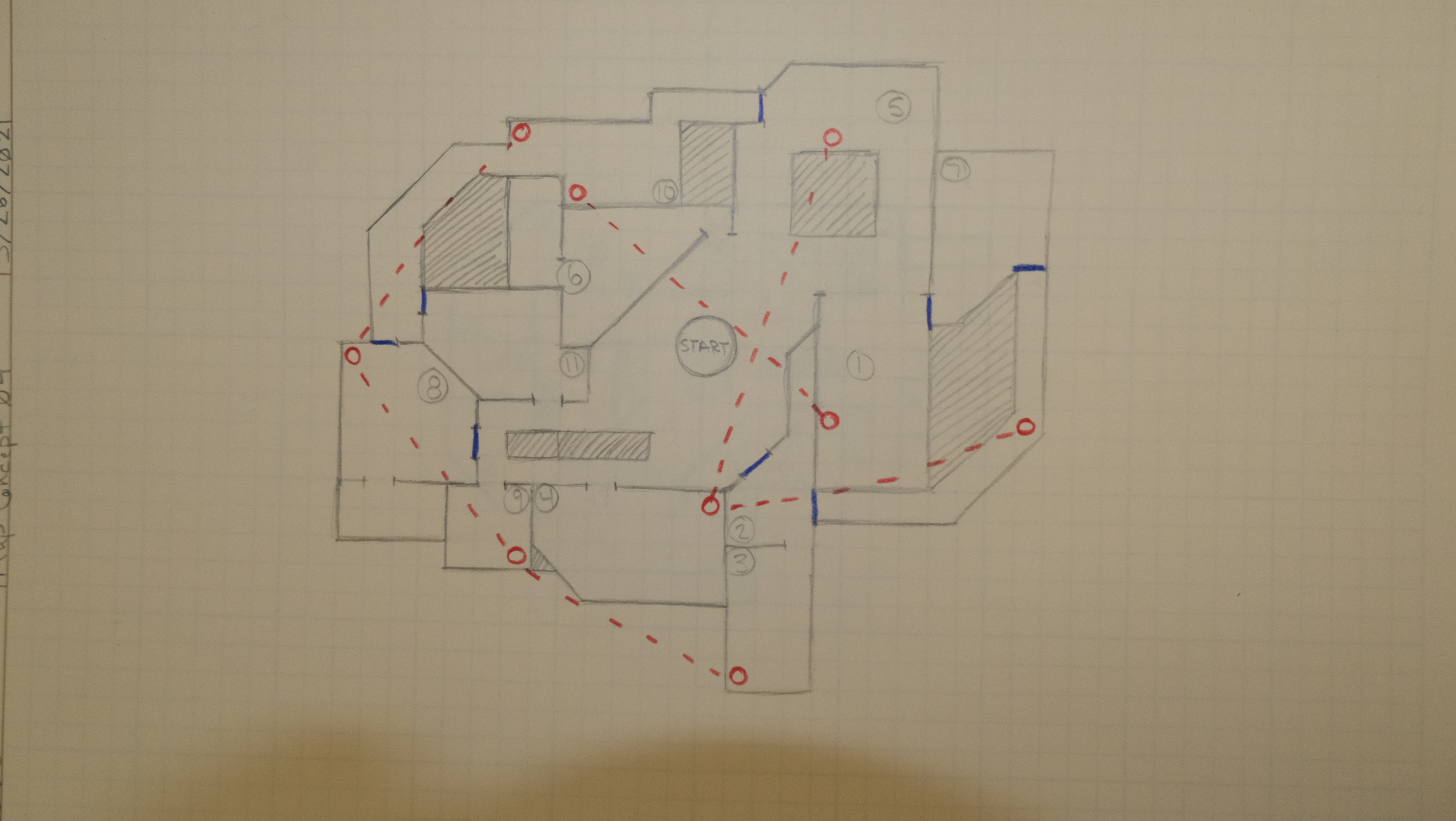
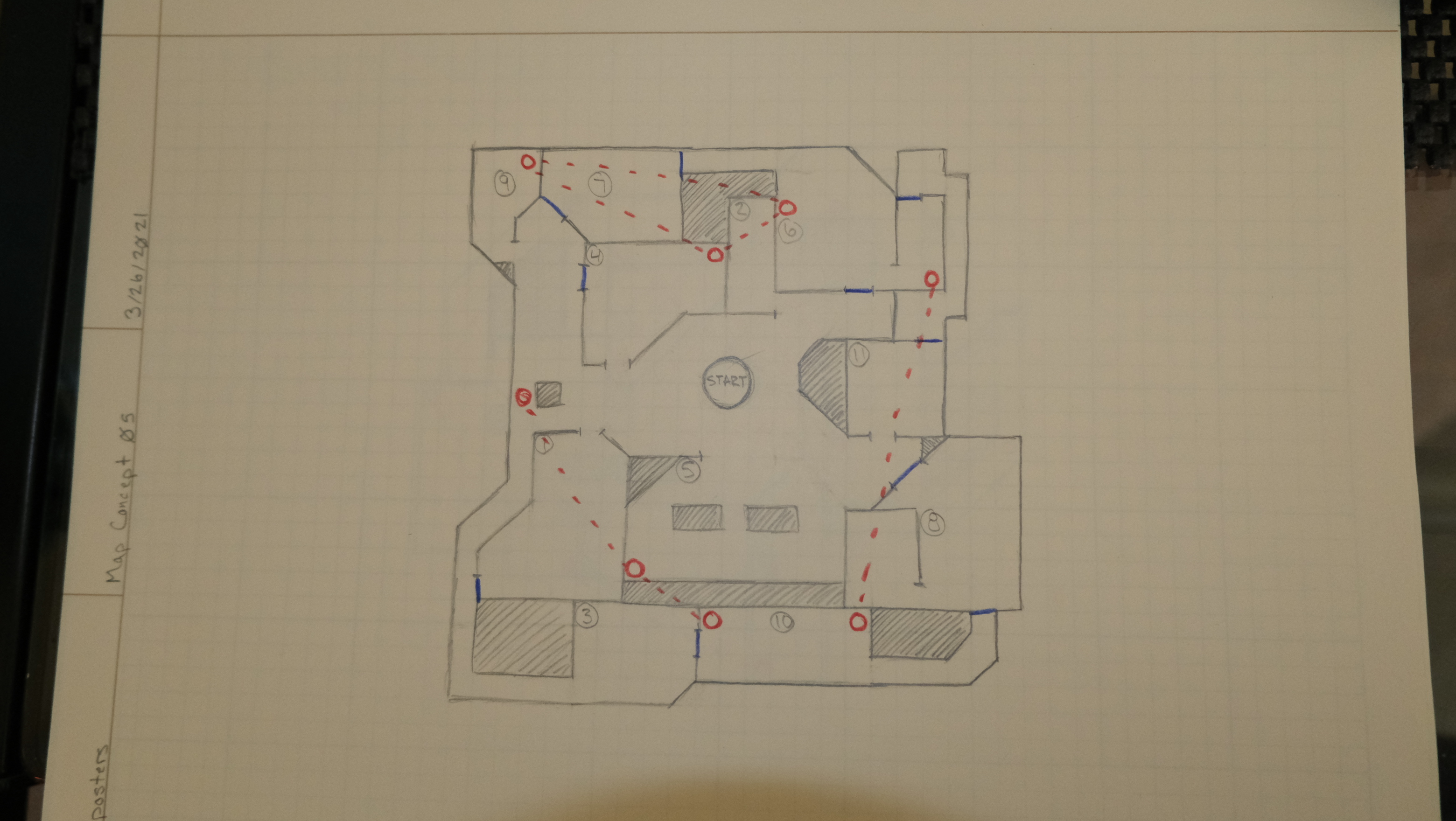
As always, I began with a sketch. Since I had a client, I started by proposing five preliminary sketches using research I had performed to justify my shapes, scale, and locations, then presented these sketches, explaining what made each unique.
The client picked favorites but made suggestions, and the process was repeated - iterations were made until we had three final contenders, seen in the next gallery.
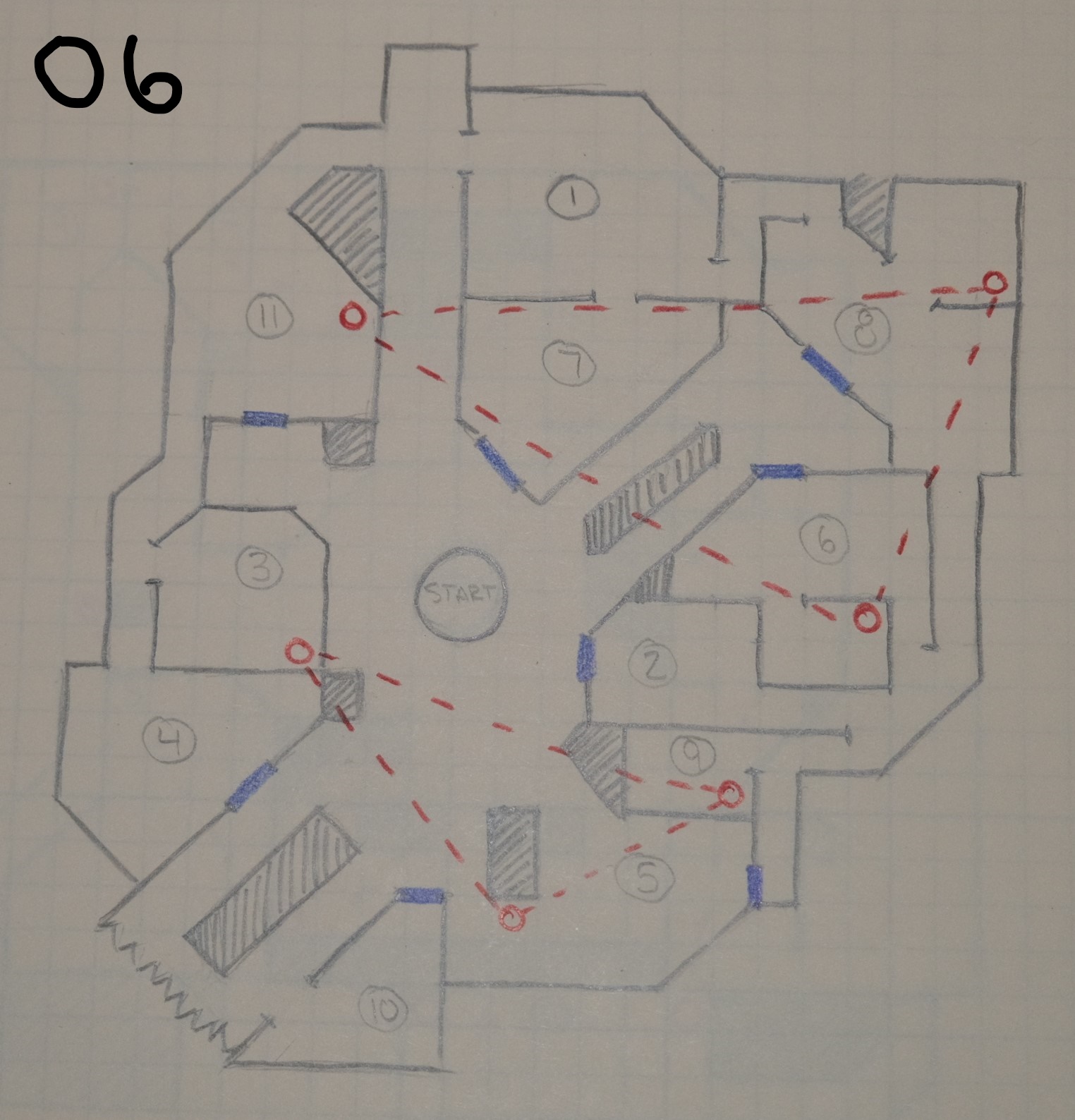
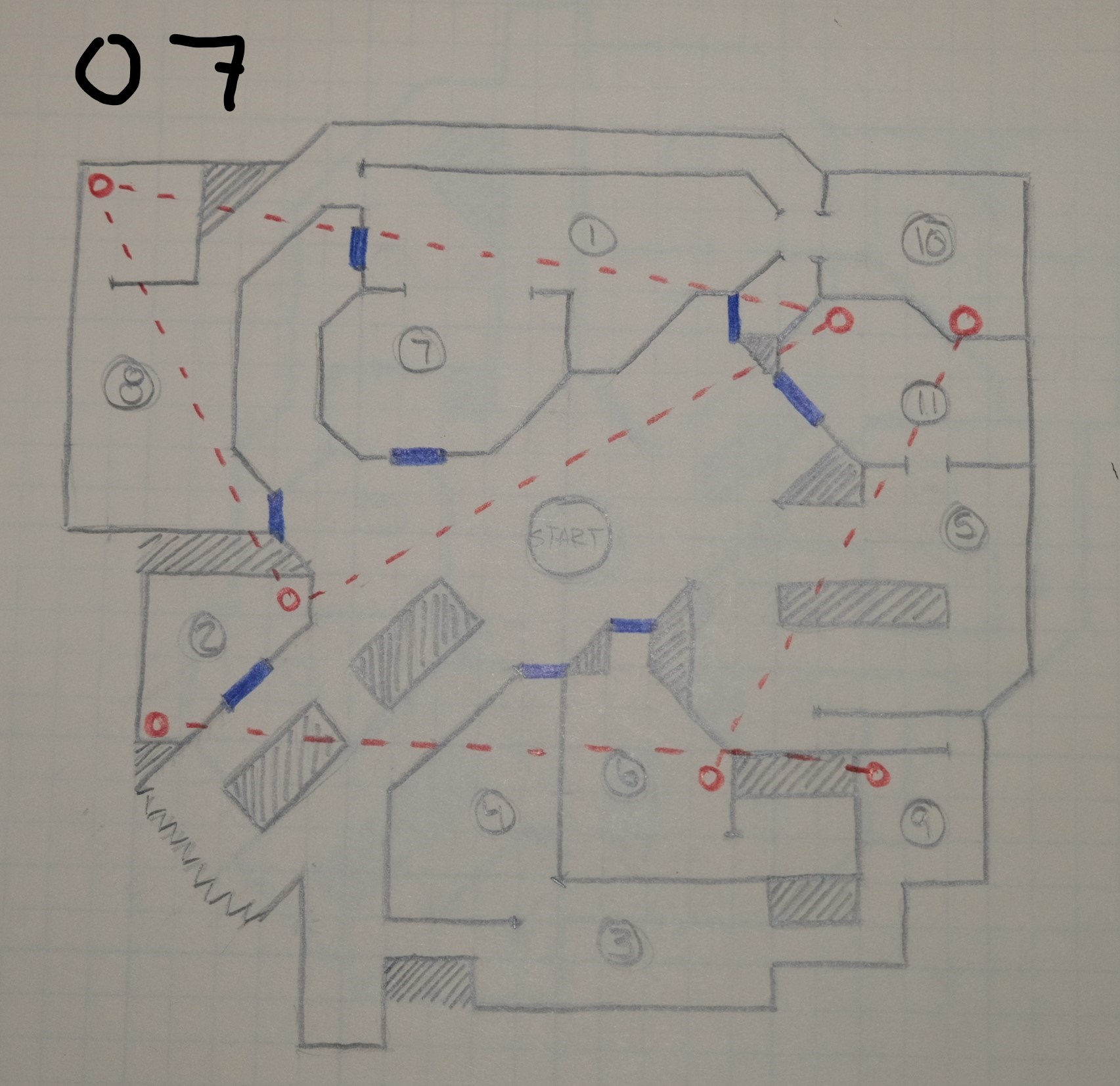
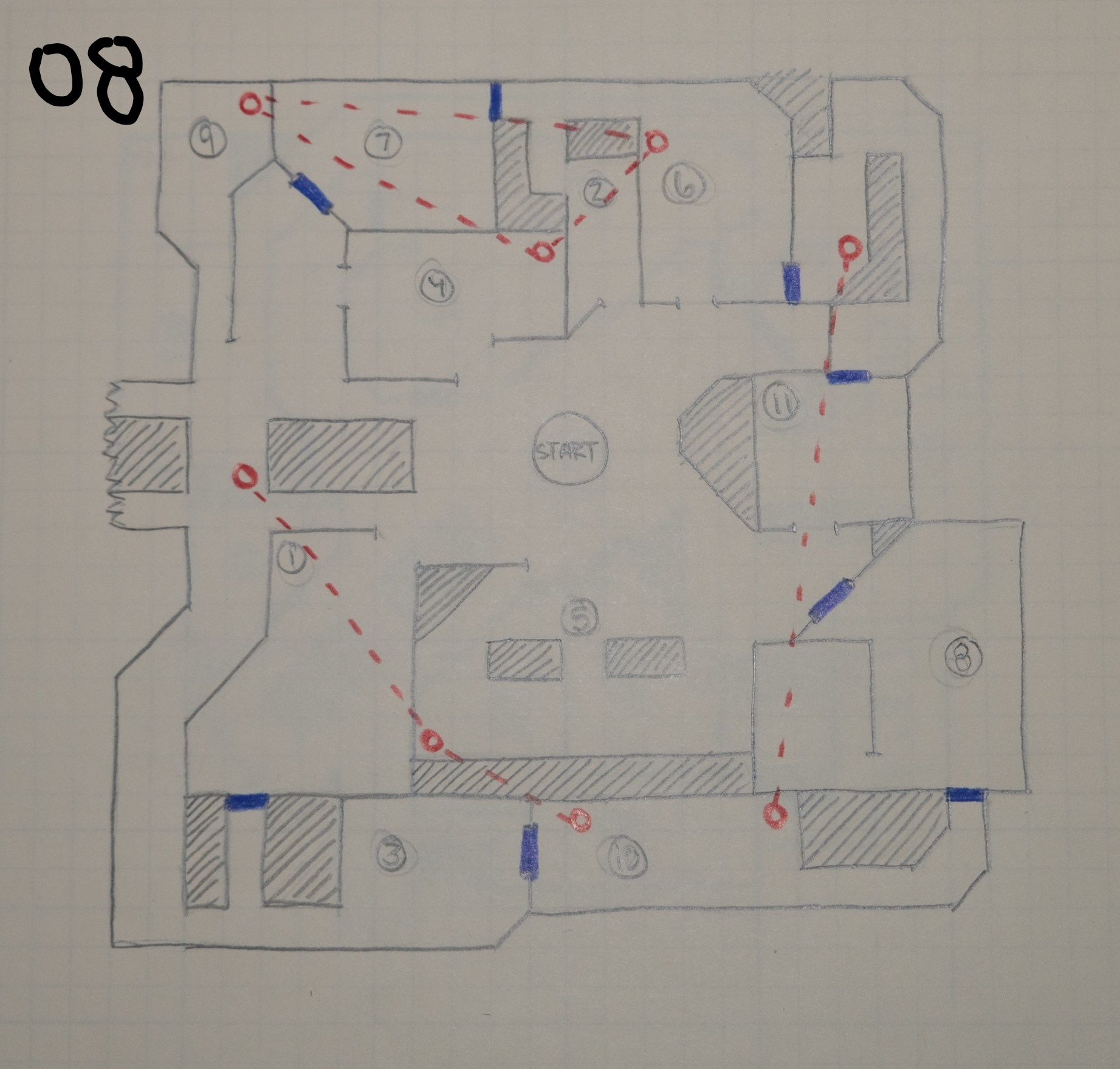
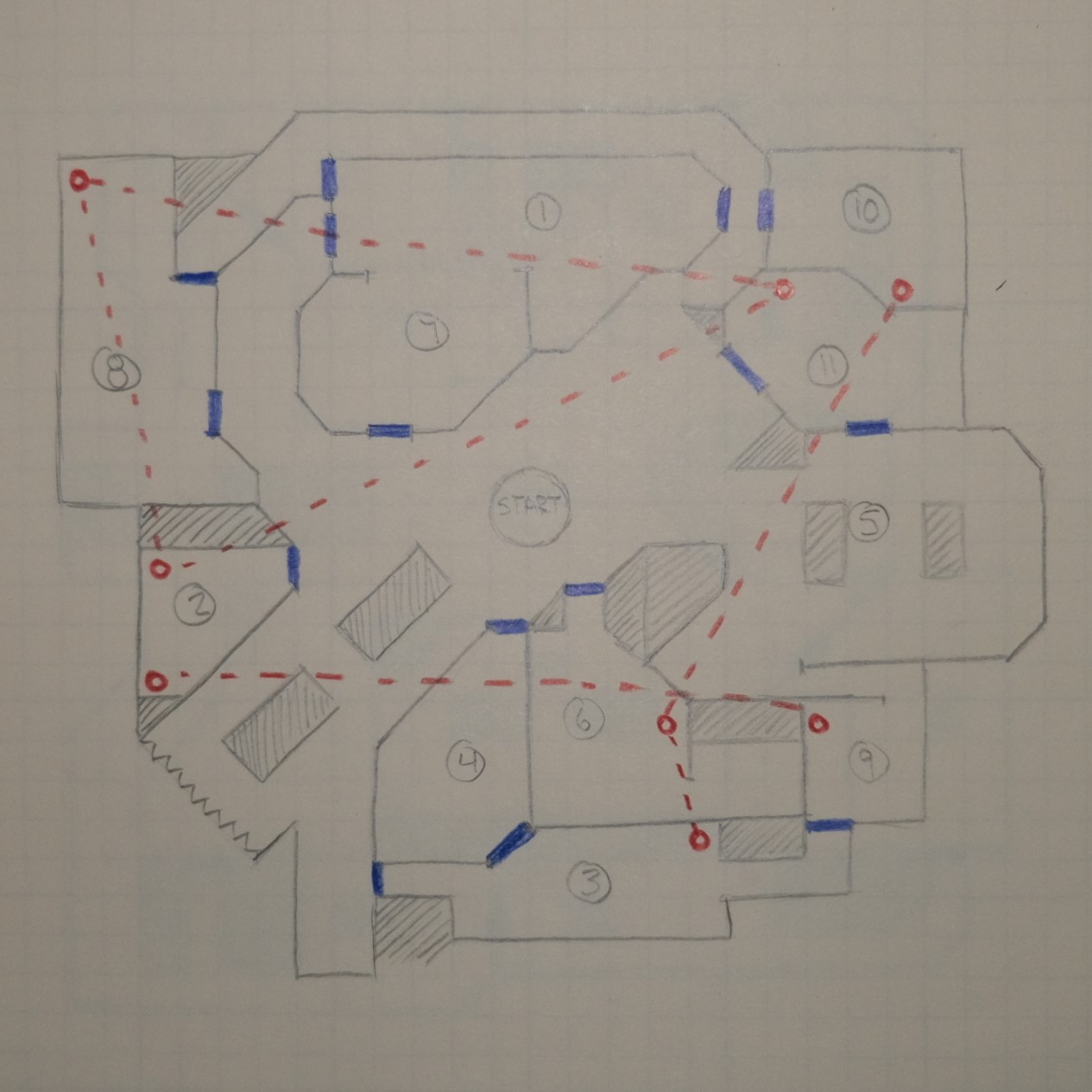
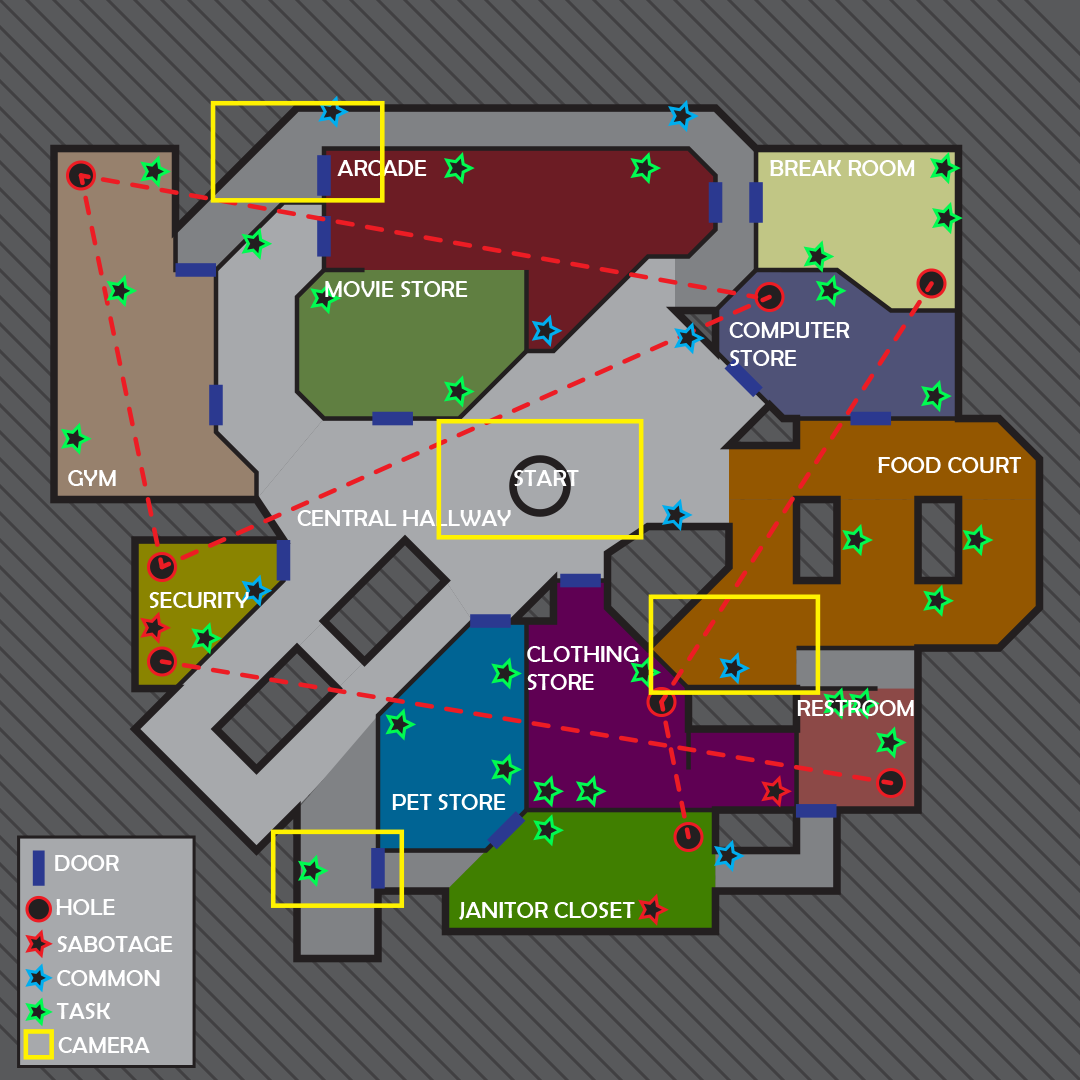
As the first map created for Impostors, Supermall presented many exciting challenges and discoveries unique to the project. Naturally, there were balance and aesthetic tweaks over time, such as changing door placement and room shapes to improve flow or give a slight advantage to one side or the other in specific locations, making some risky while others safer.
Other issues included limited player visibility, tedious traversal, and too many alternate paths, which made it too easy for players to miss each other. I fixed most of these by downsizing the level incrementally - performing nip and tucks to extra halls, doors, and rooms.
final supermall map
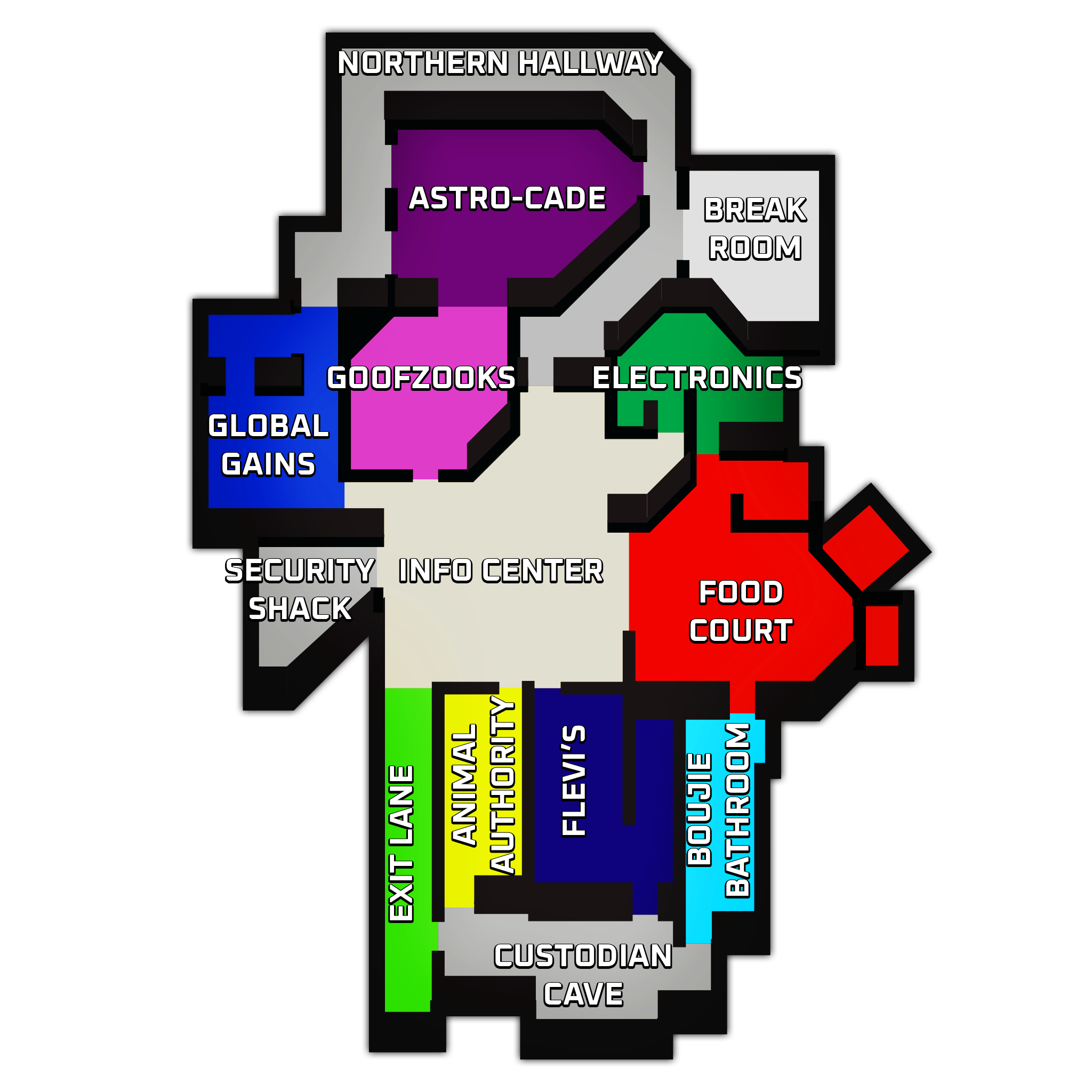
Above is the final minimap as displayed in the game. Here, the iteration compared to the 'final digitized concept' becomes aparent.
The most prominent unexpected issue was that of walls. In early iterations, players could hide effectively by standing behind walls thanks to the isometric/orthographic view while having 3D space. The solution was to place blocking volumes above walls so players couldn't hide - represented by thick black lines on the minimap; this had the side effect of lengthening the map vertically by a significant margin.
The vertical scale made the level feel awkward, which we kept in mind for later iterations and levels. We attempted a rework for Supermall to compress it vertically, but play testers preferred the original design over all subsequent designs despite the awkward length.
minimall final screenshots
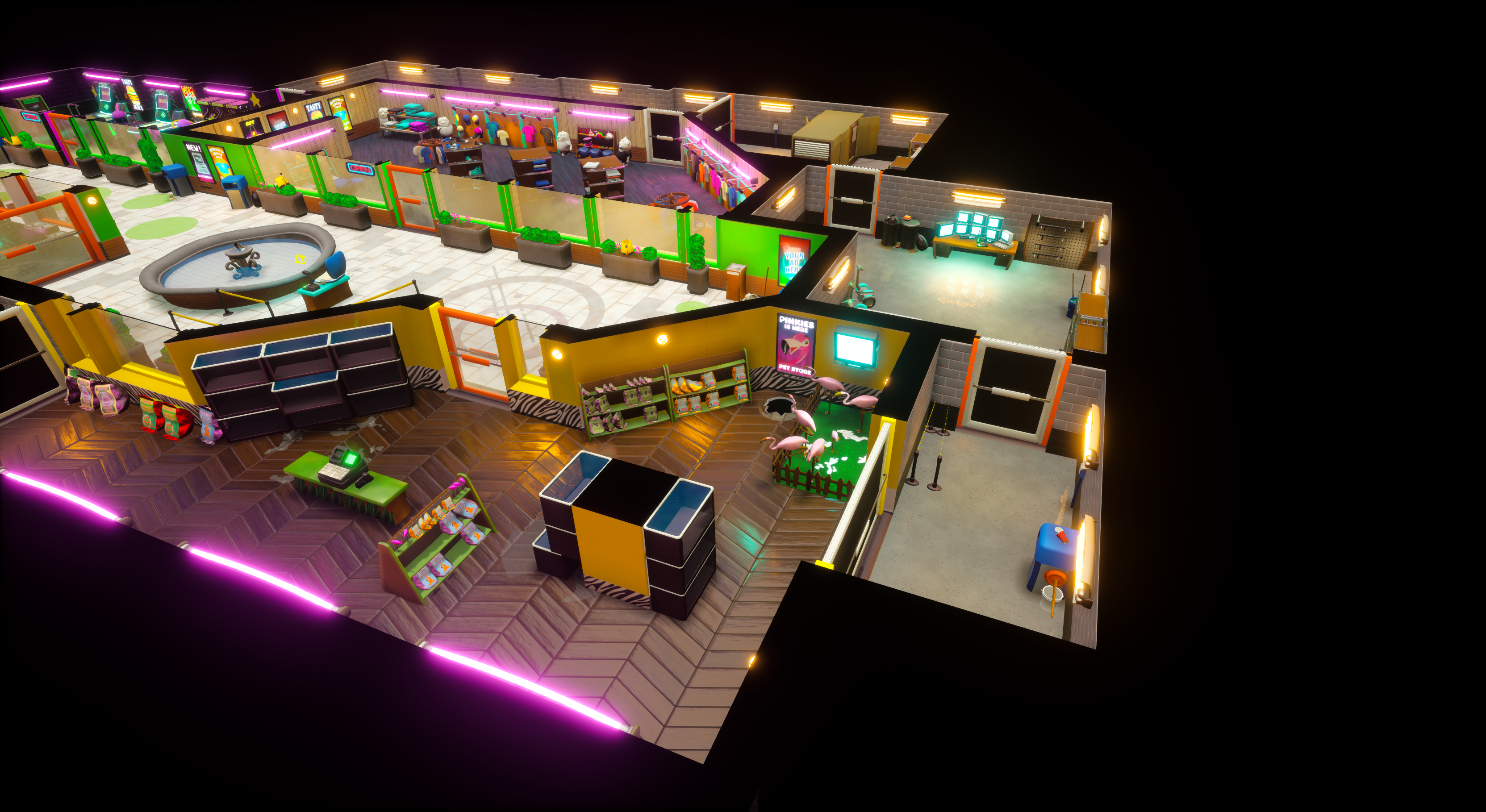
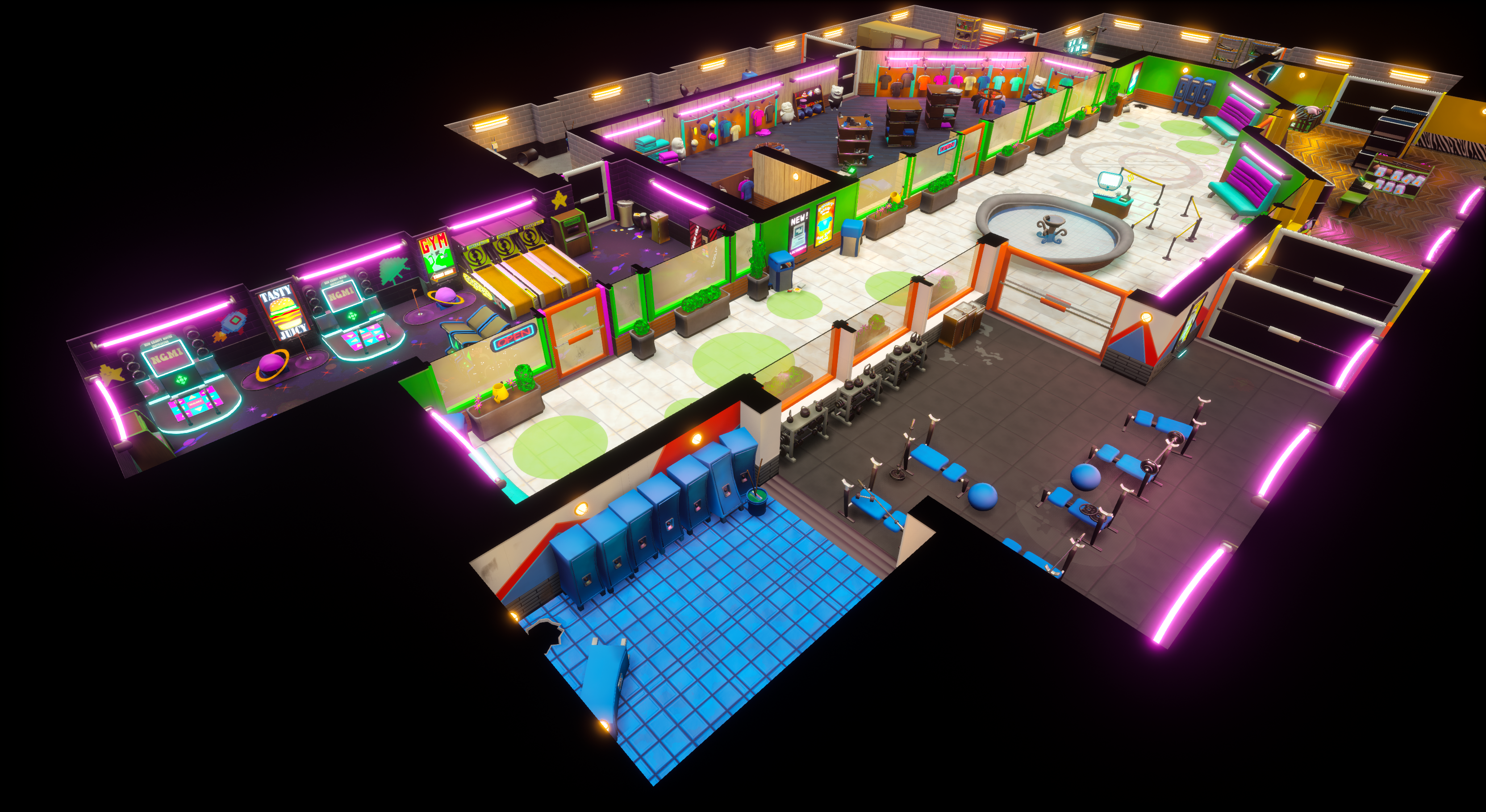
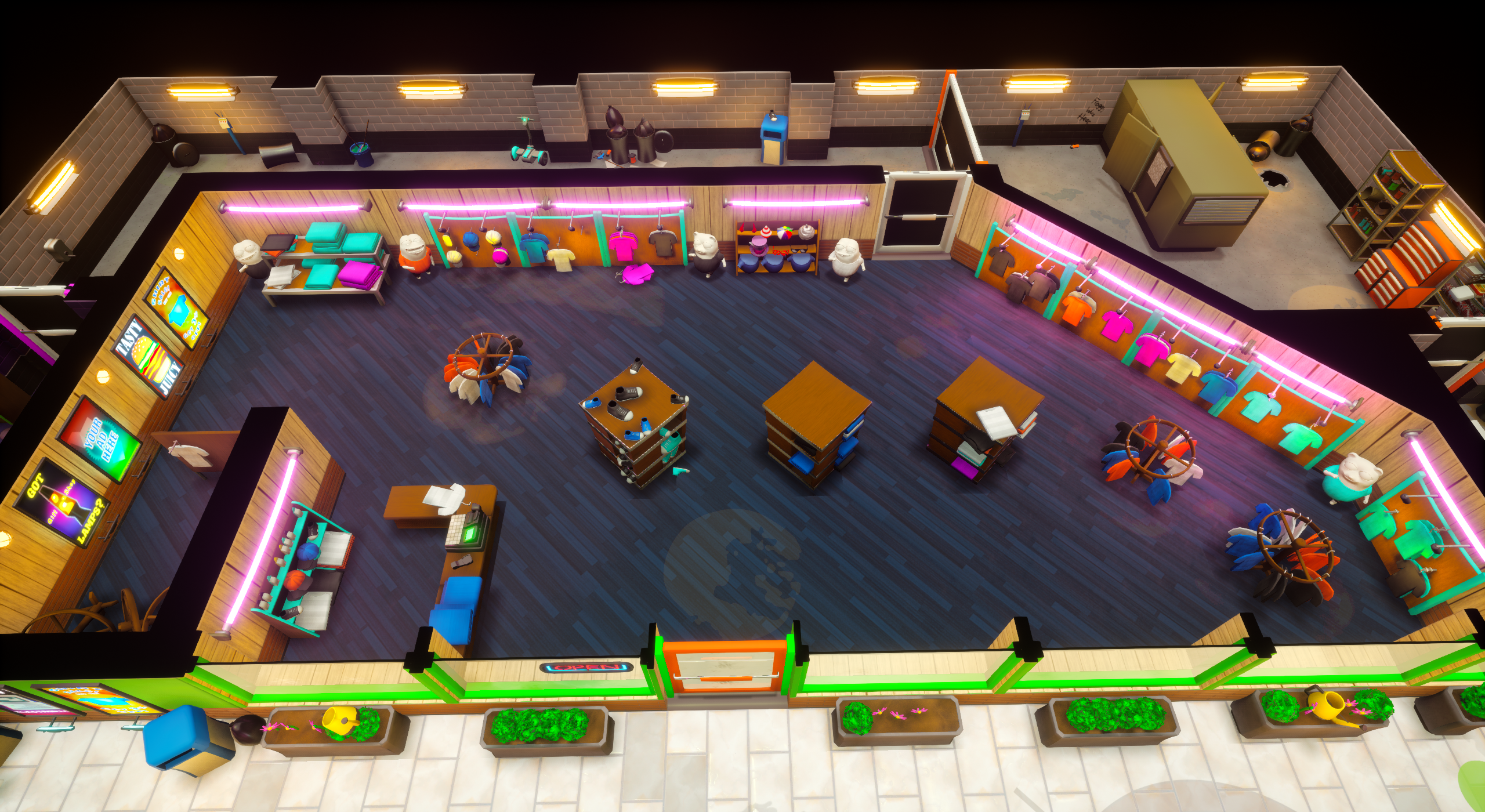
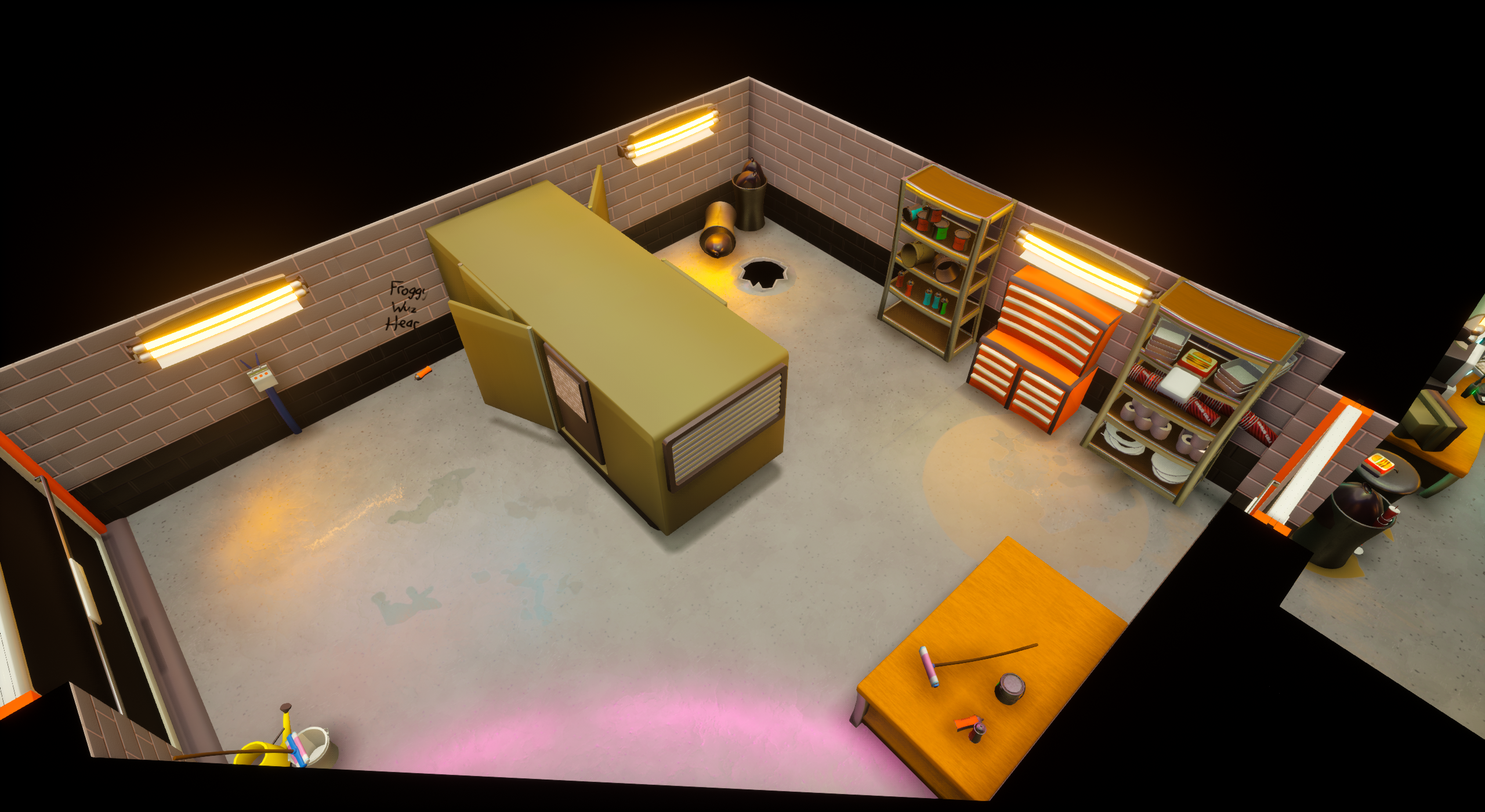
The second level built for Impostors was Minimall, designed for 5-11 people. This map came about when we realized that Supermall was not fun to play with less than 10 people, but we knew if we shrank it down, it would be too cramped for the 15-player lobbies we set out to create.
Minimall is meant to be just that - Supermall, but mini. It has the same rooms, minigames, and art, just at a significantly smaller scale. Minimall was a smash hit with playtesters; most enjoyed the tense, close-quarters gameplay, and appreciated the carefully balanced locations of minigames, tunnels, and obstacles.
minimall sketches
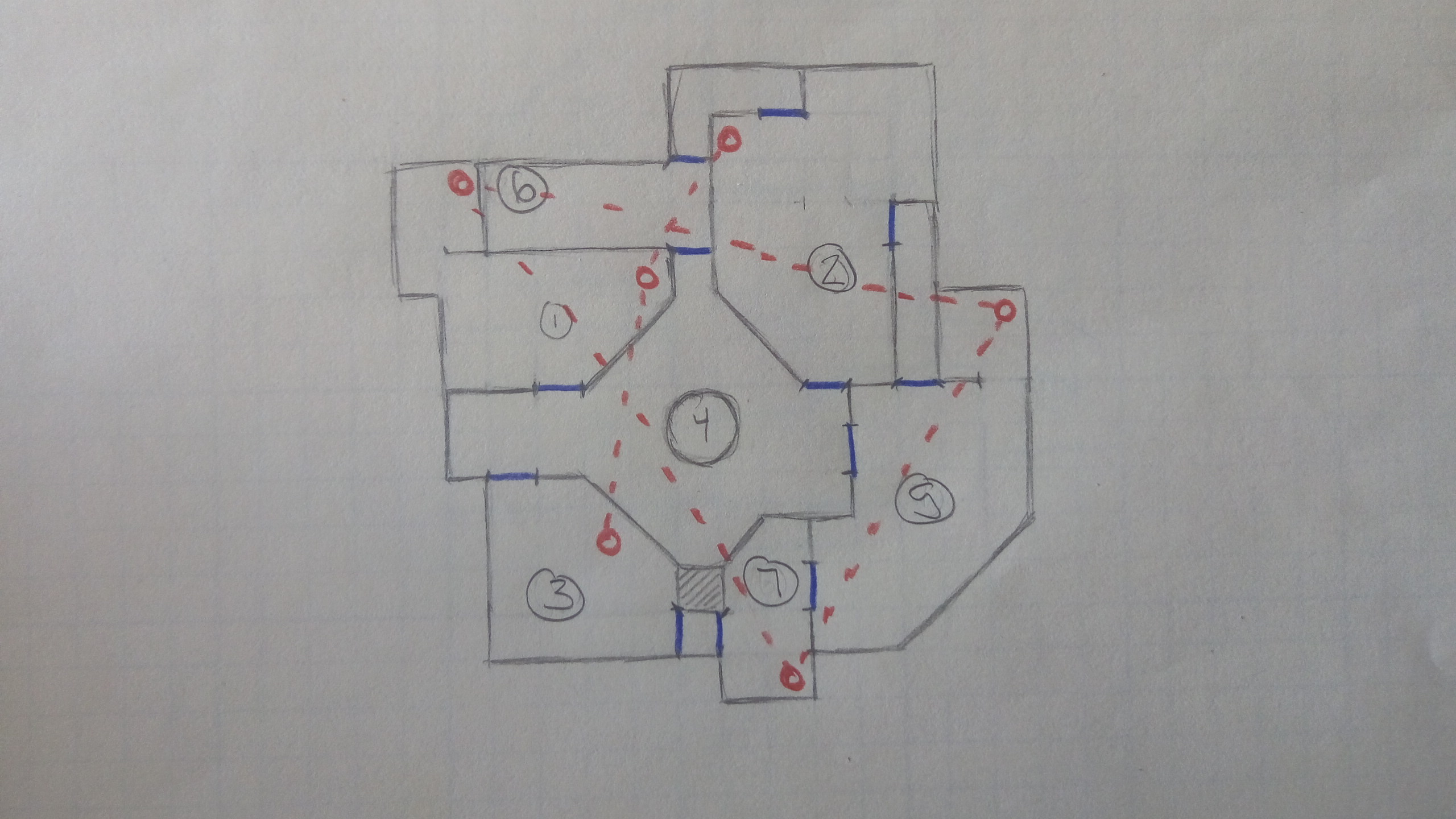
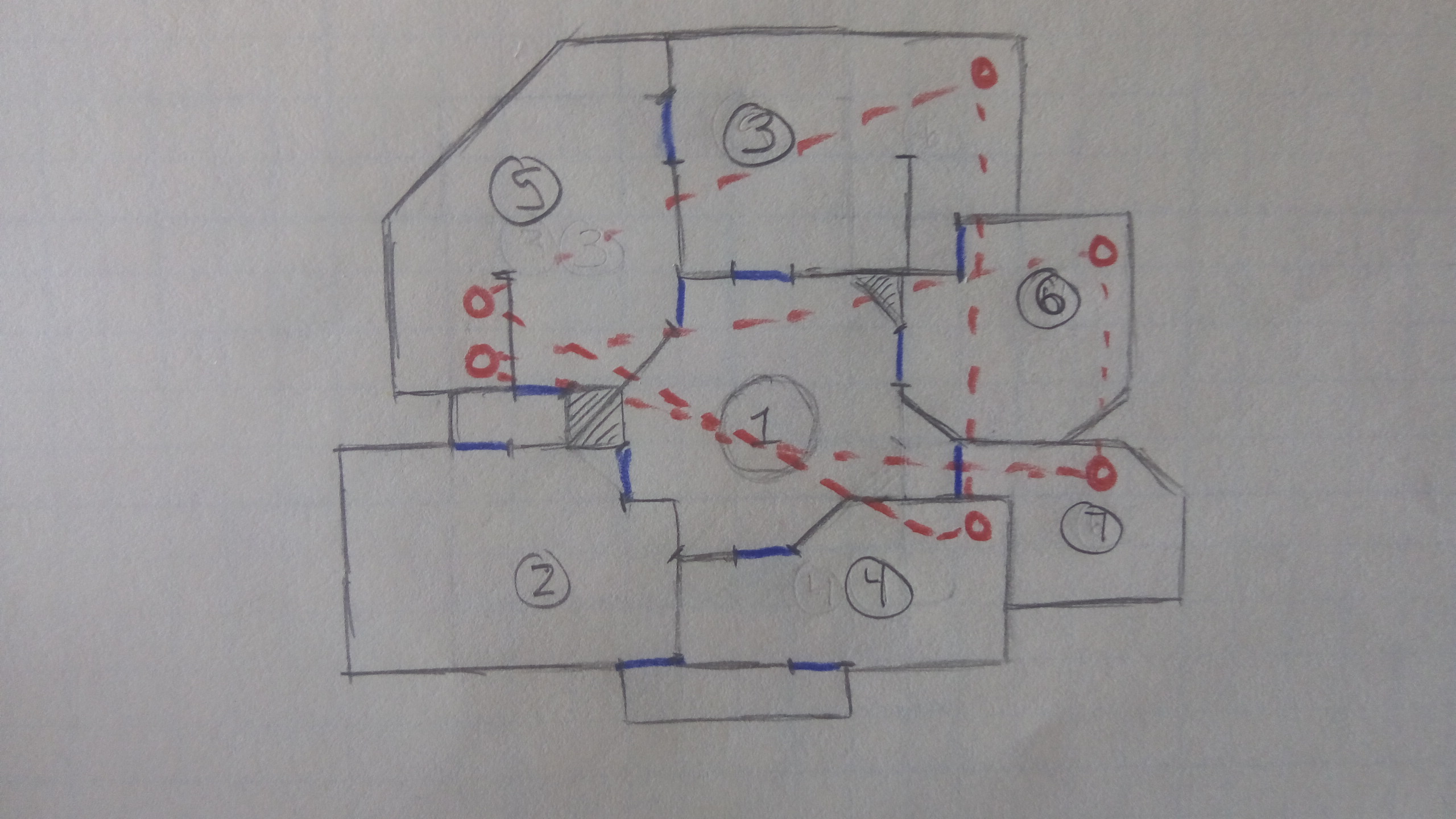
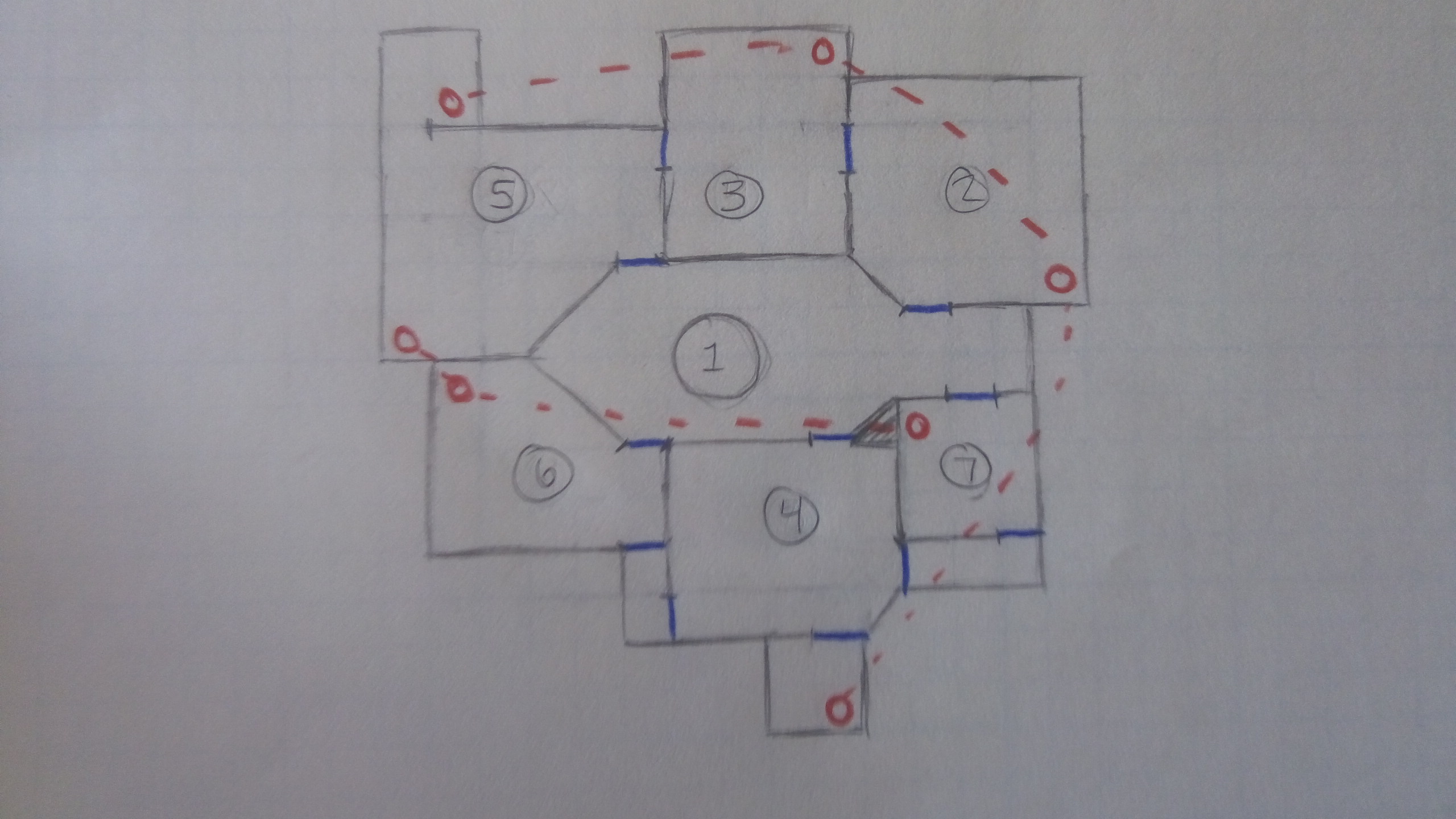
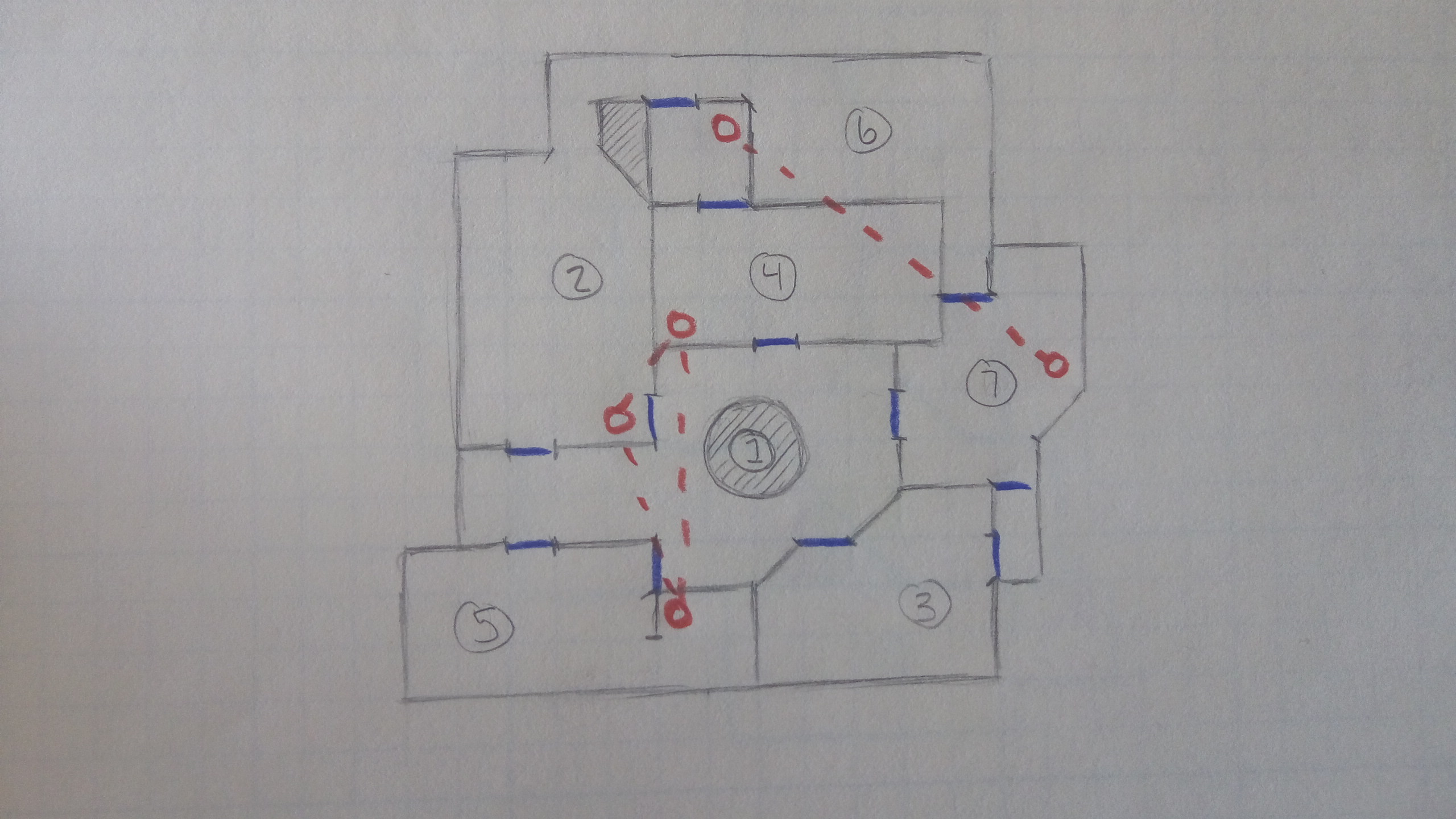
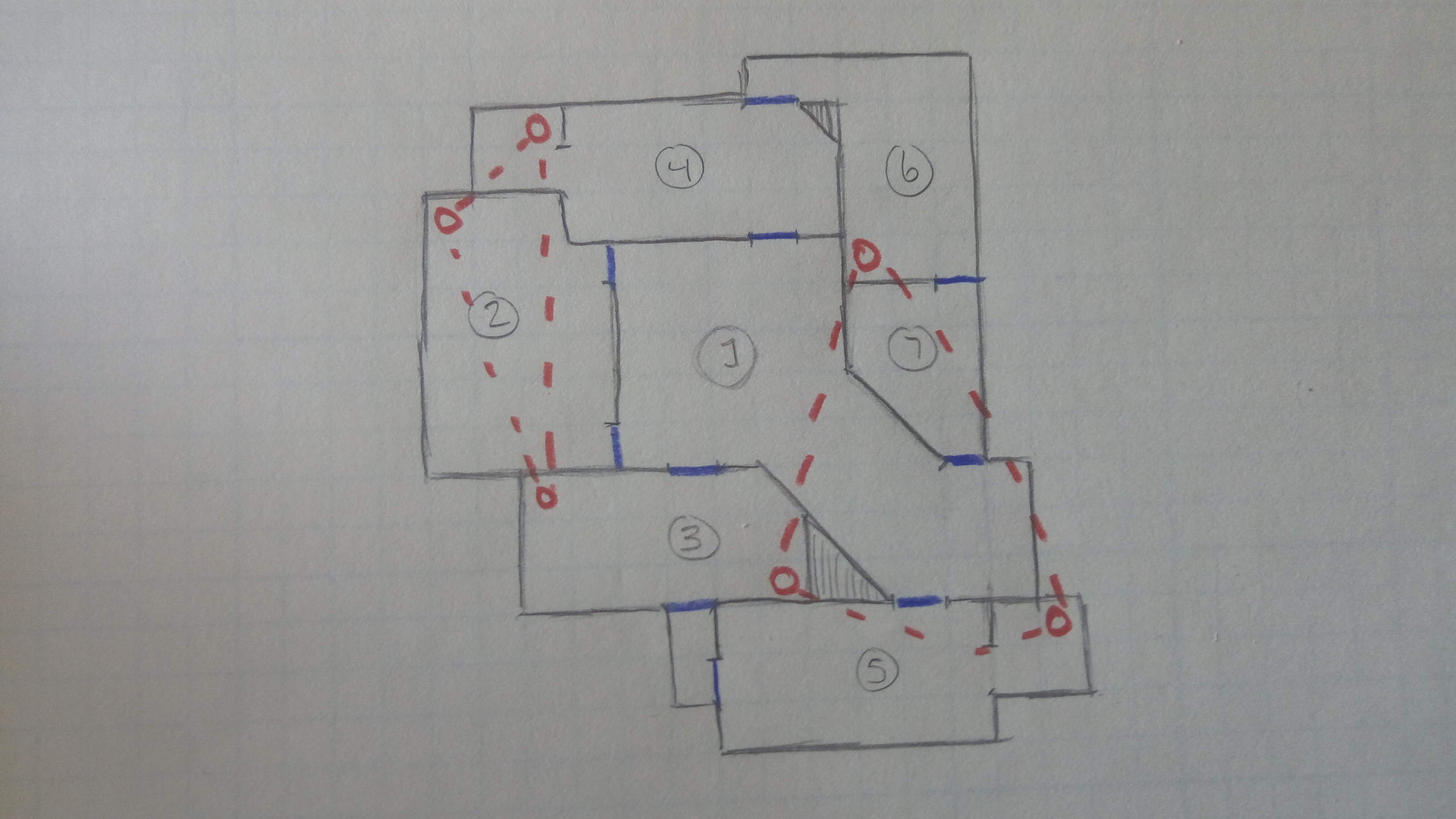
Minimall underwent the same sketch and client review process as Supermall.
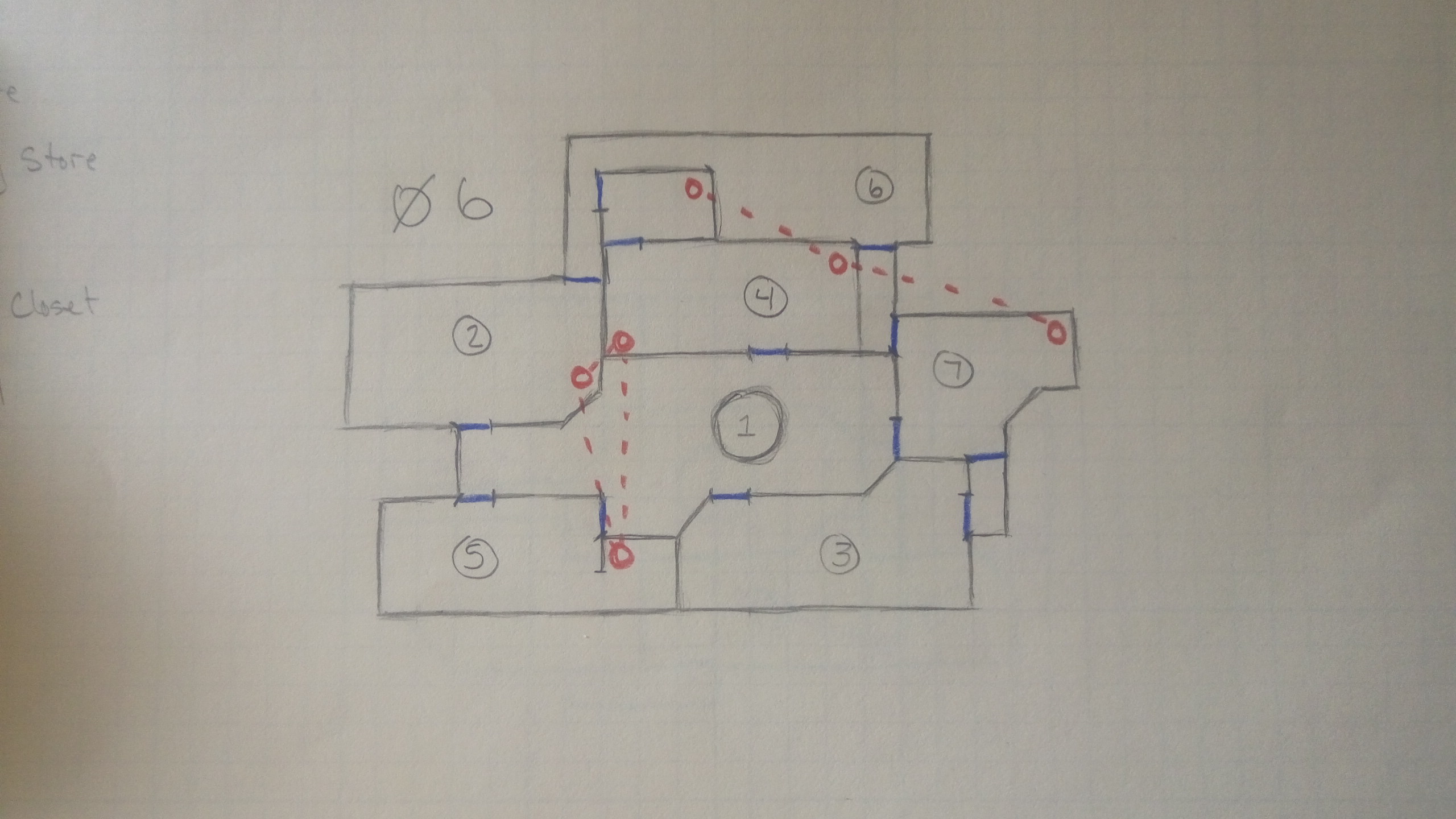
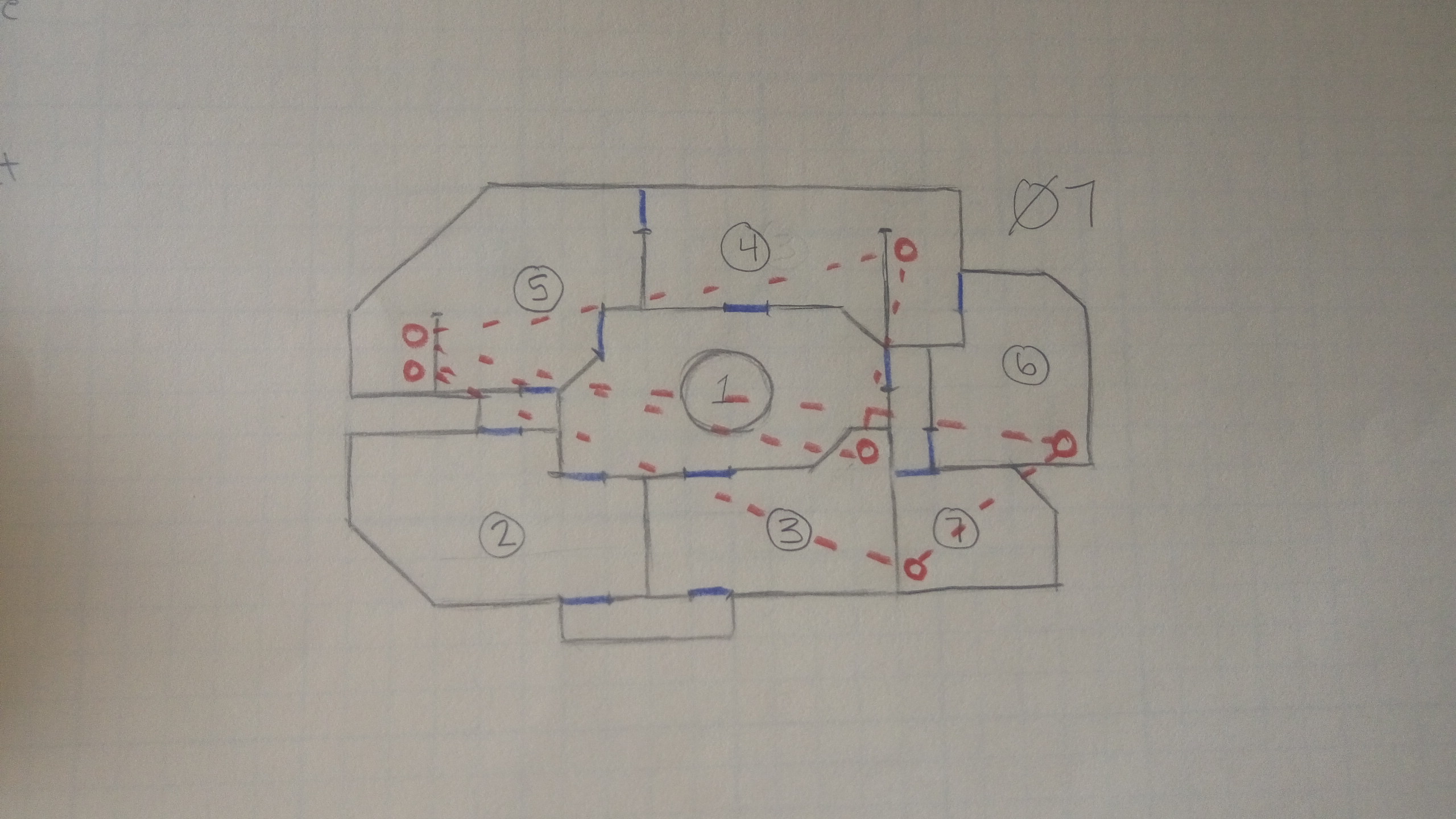
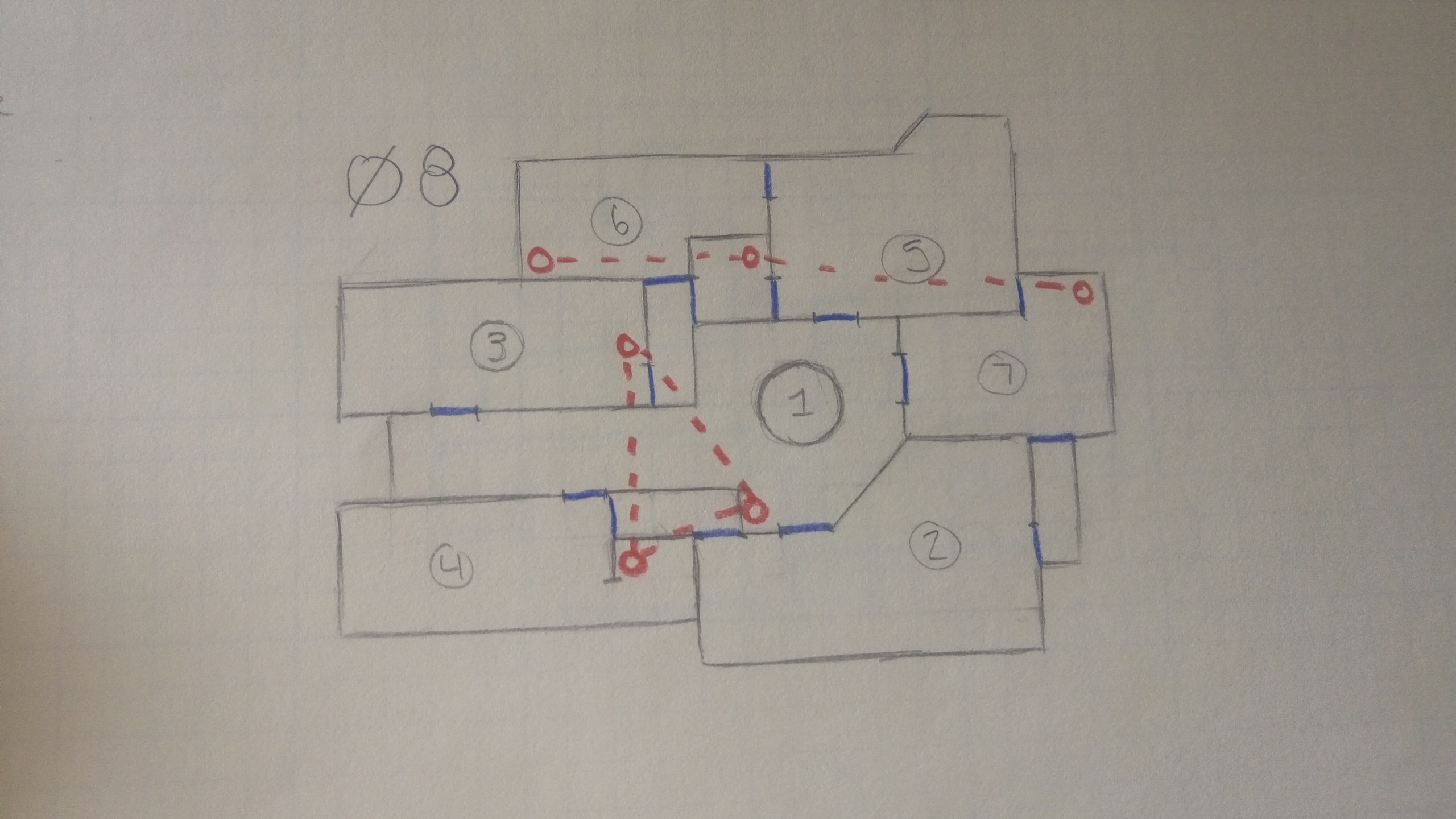
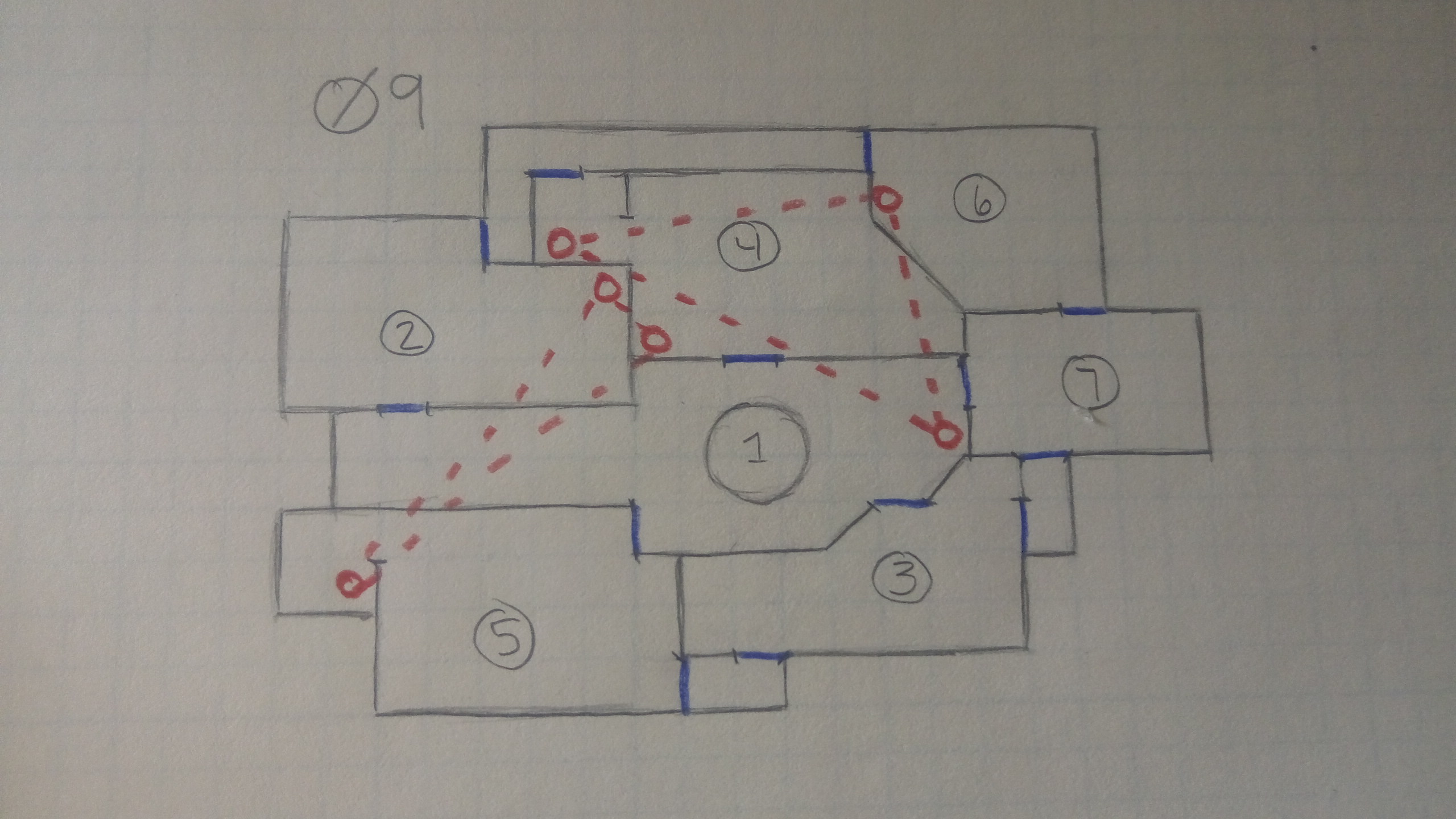
Luckily, with lessons learned from Supermall, Minimall was much easier to design, and the wall blocking volumes were accounted for in the design before the blockout was made.
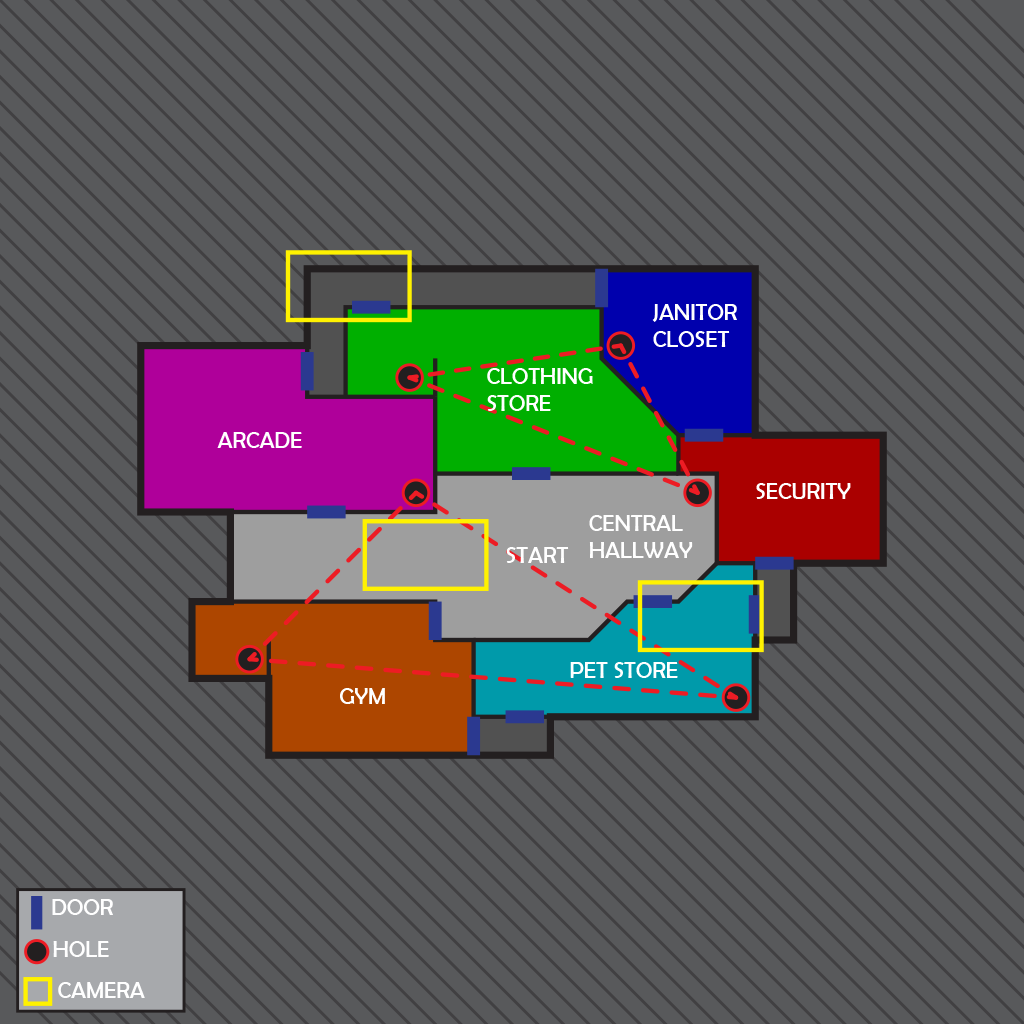
final minimall map
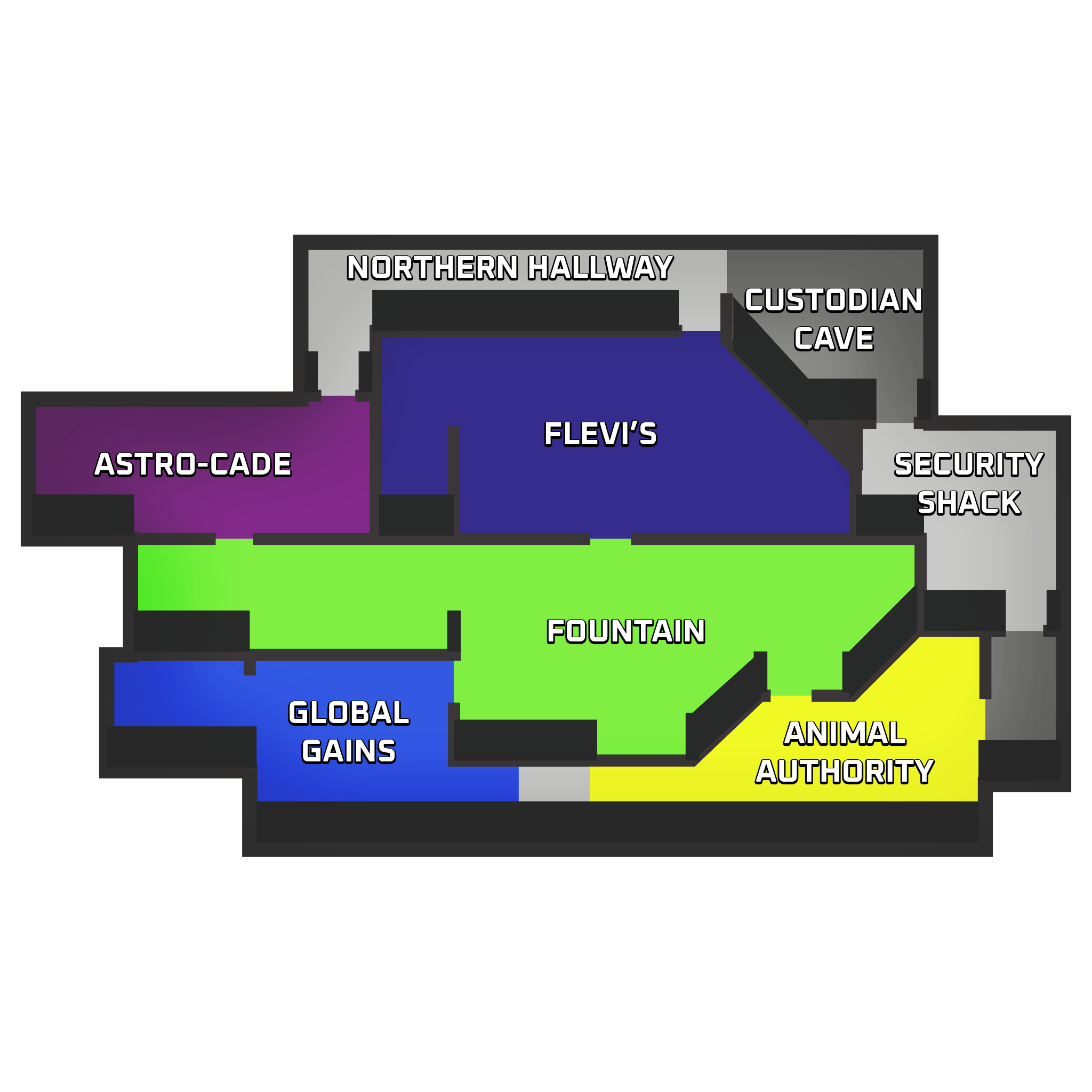
Above is the final minimap as displayed in the game.
minigame screenshots
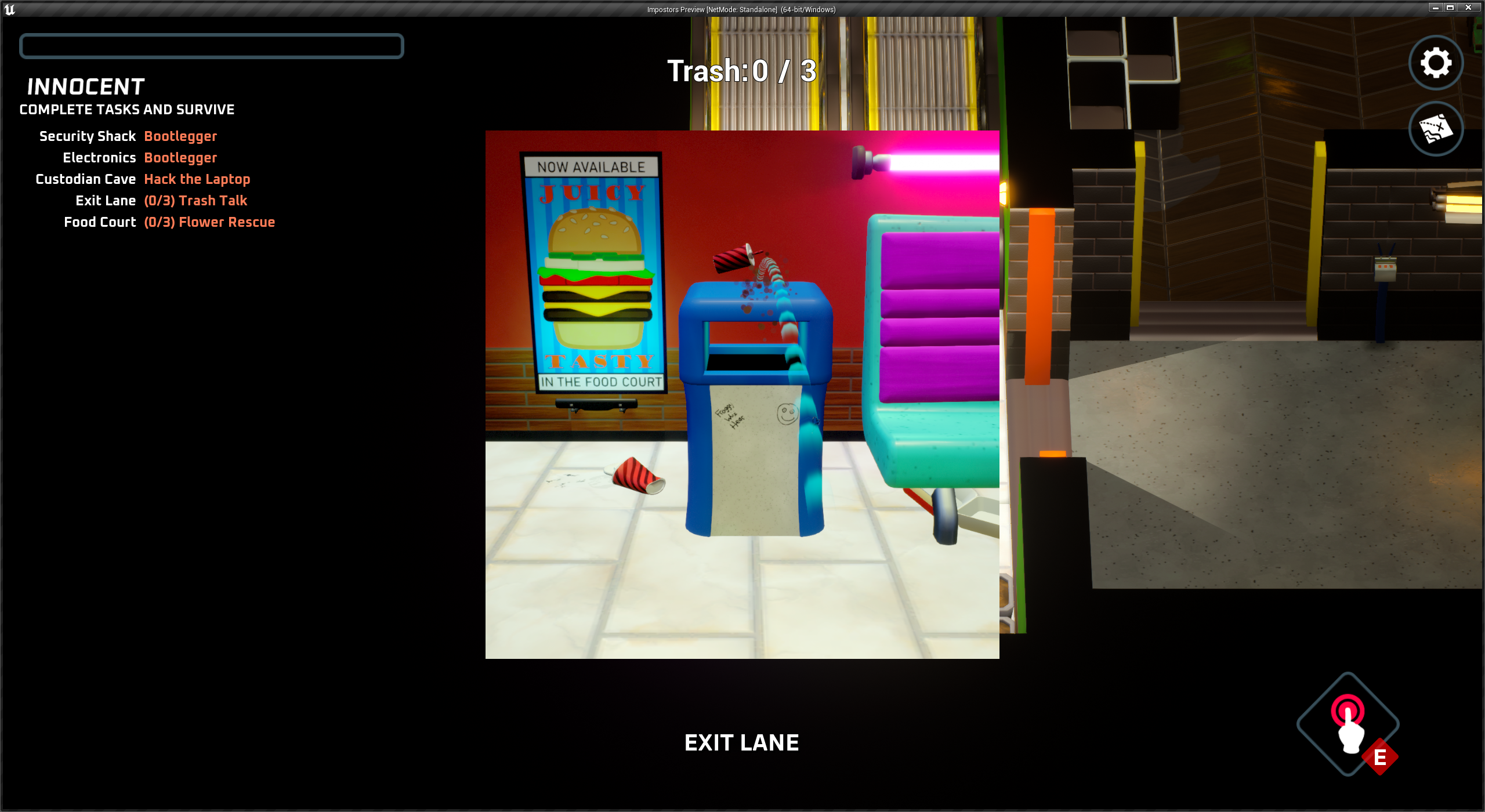
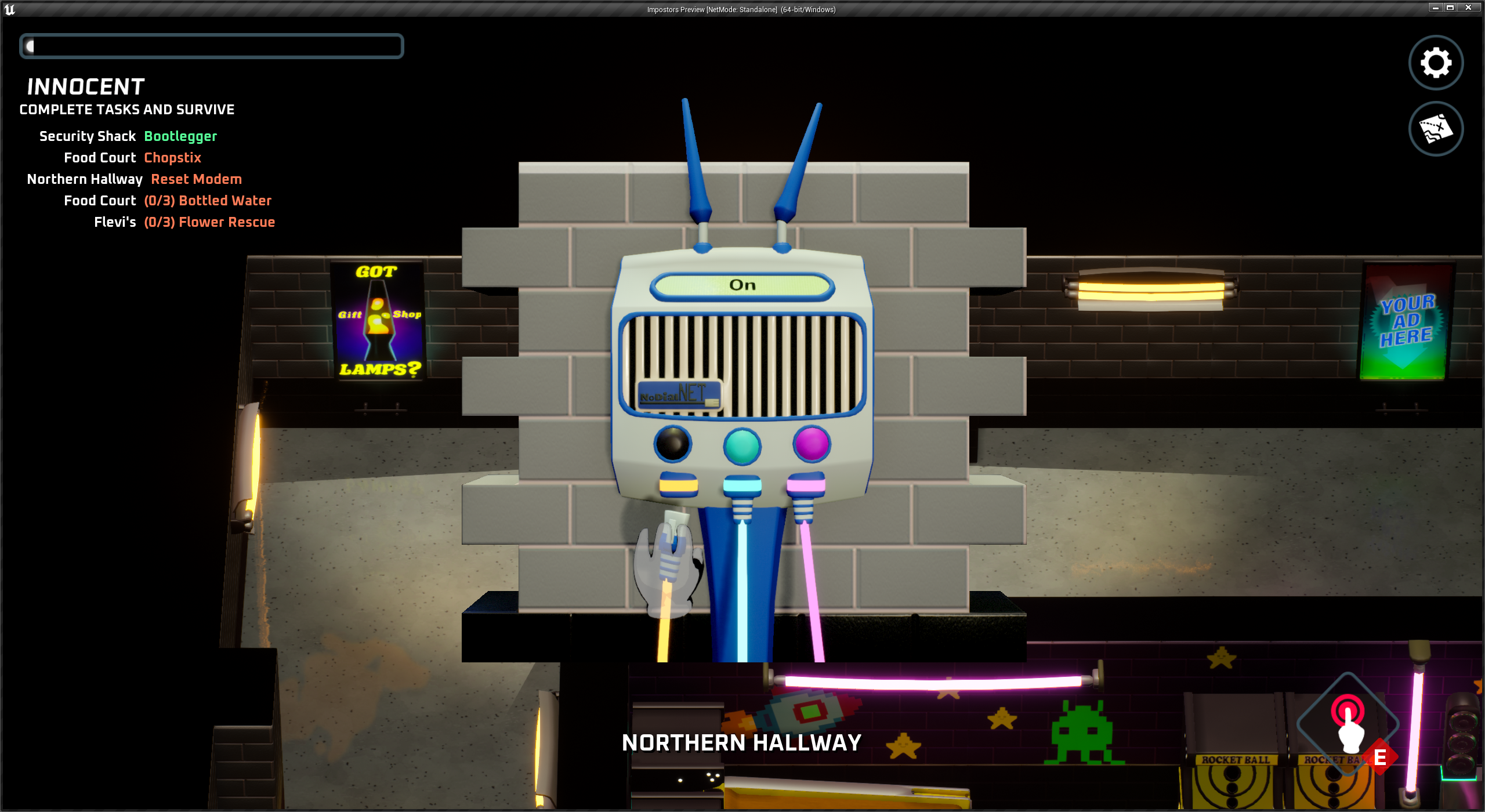
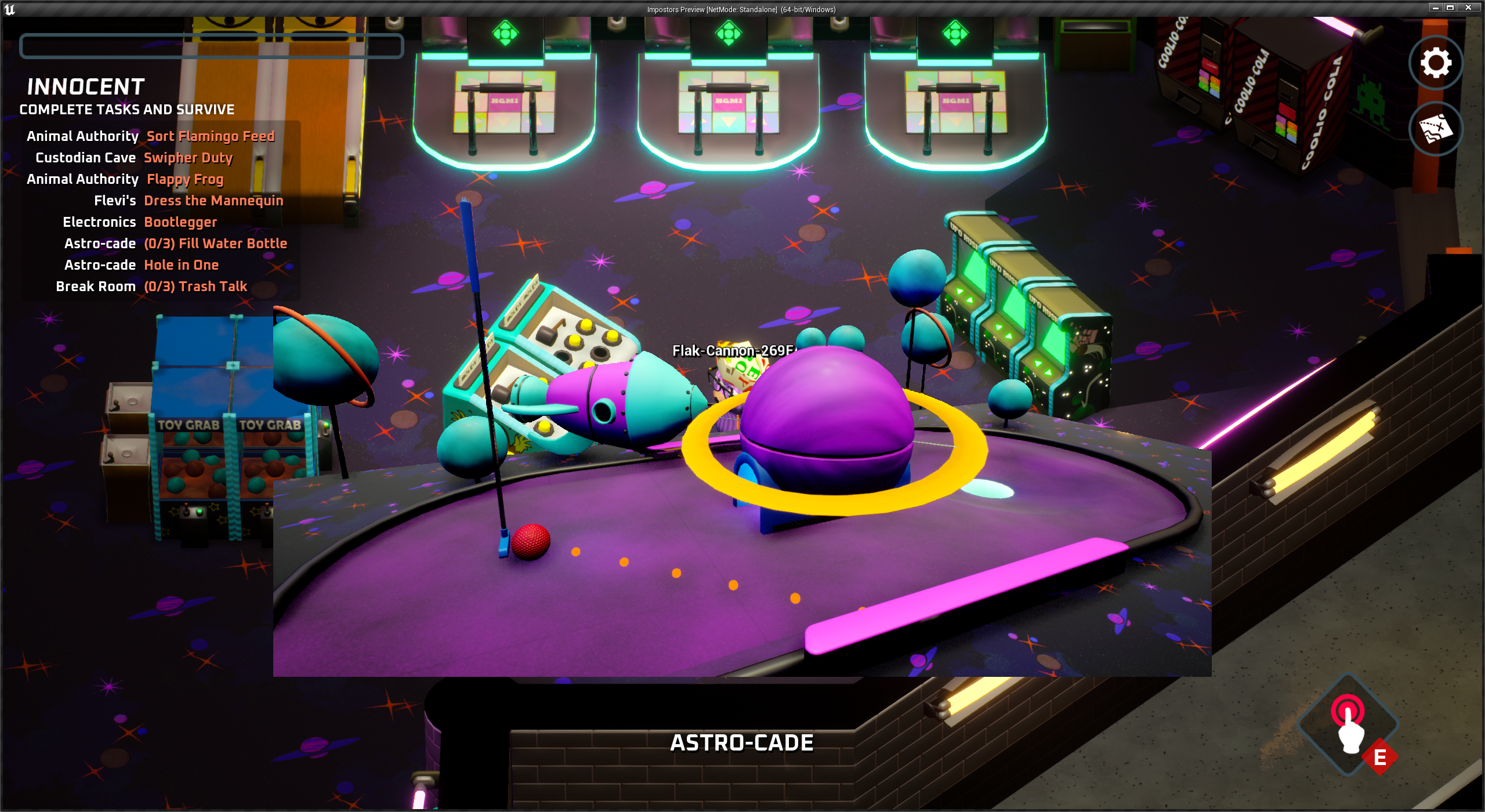
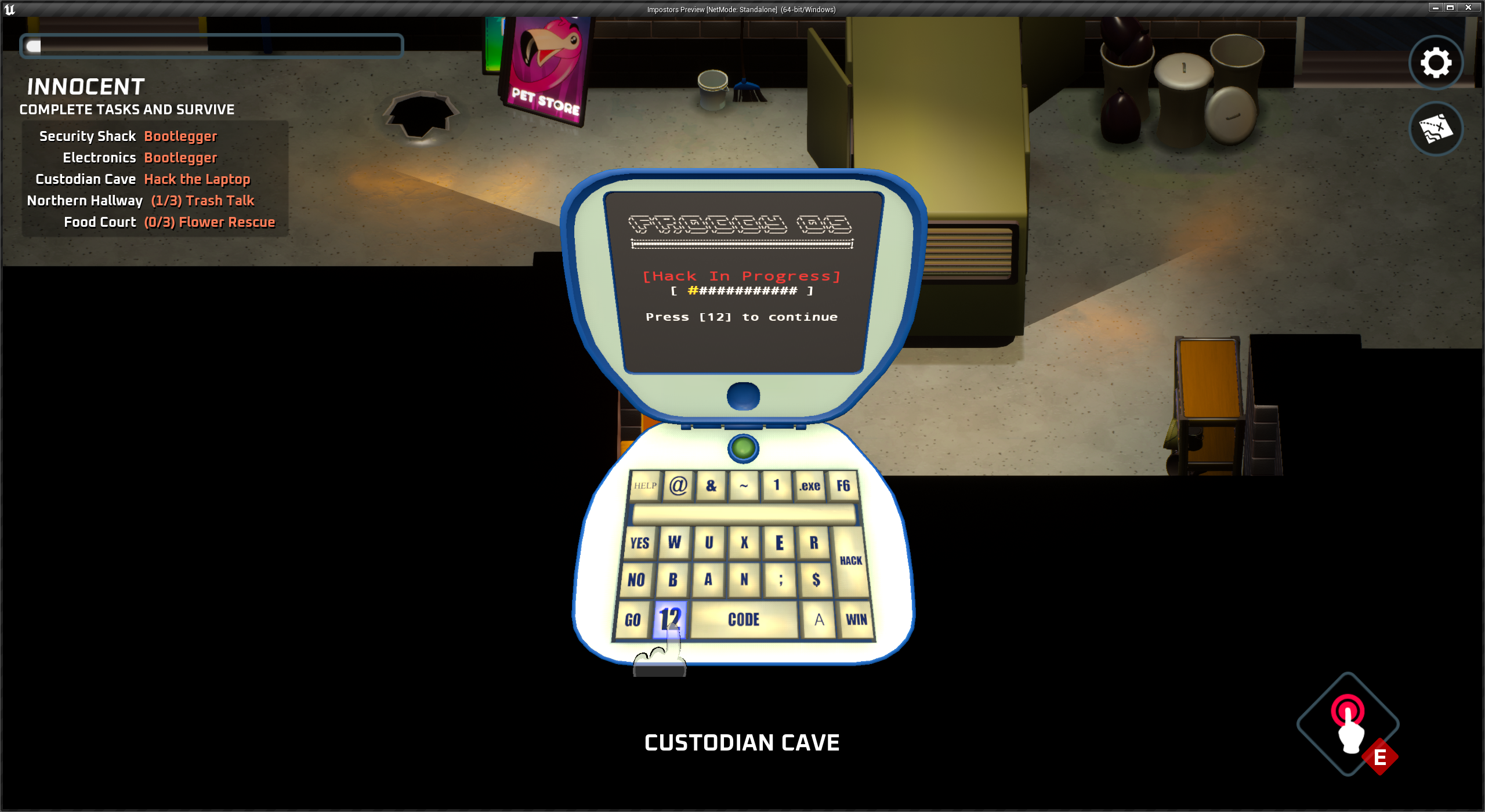
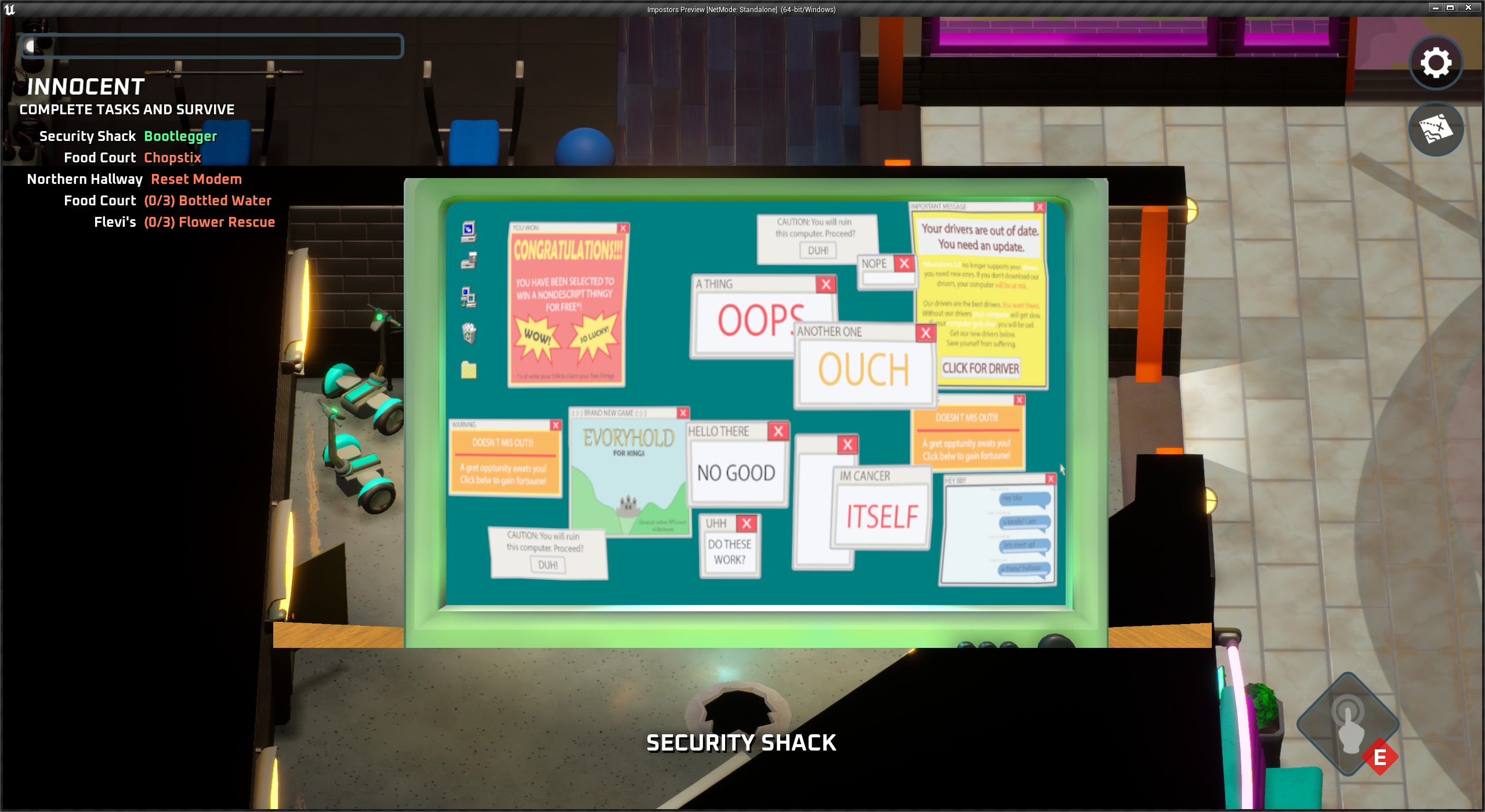
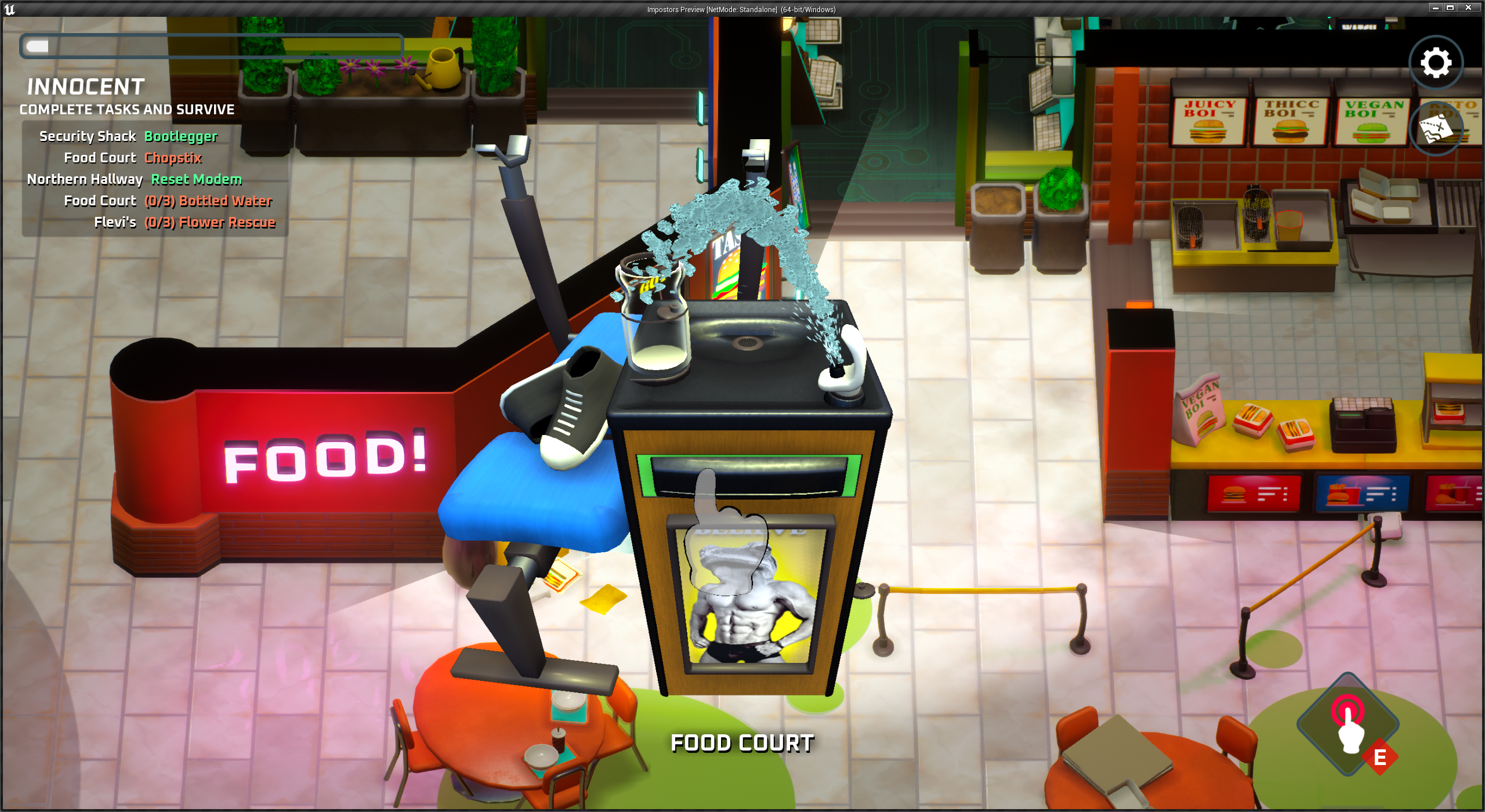
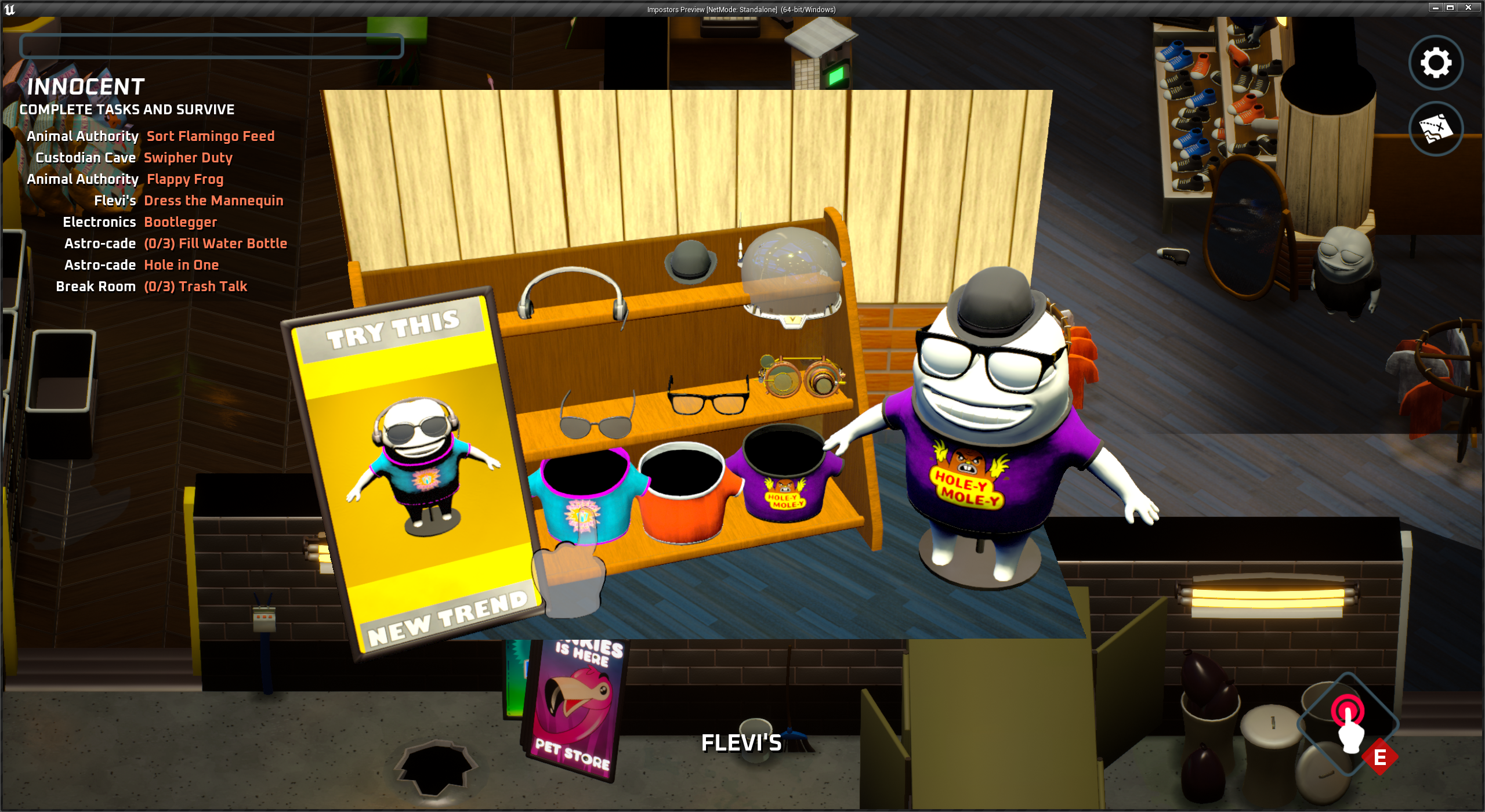
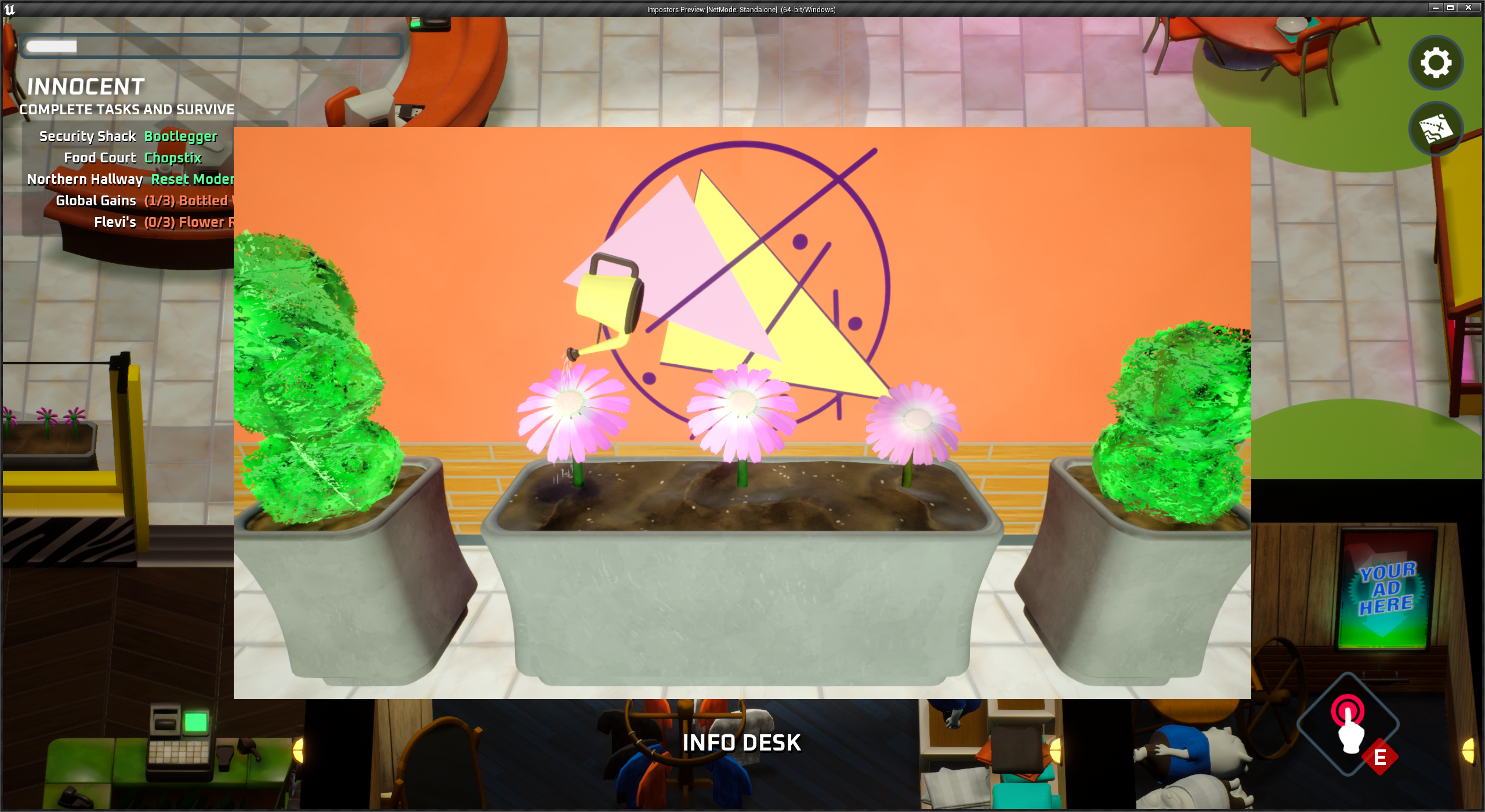
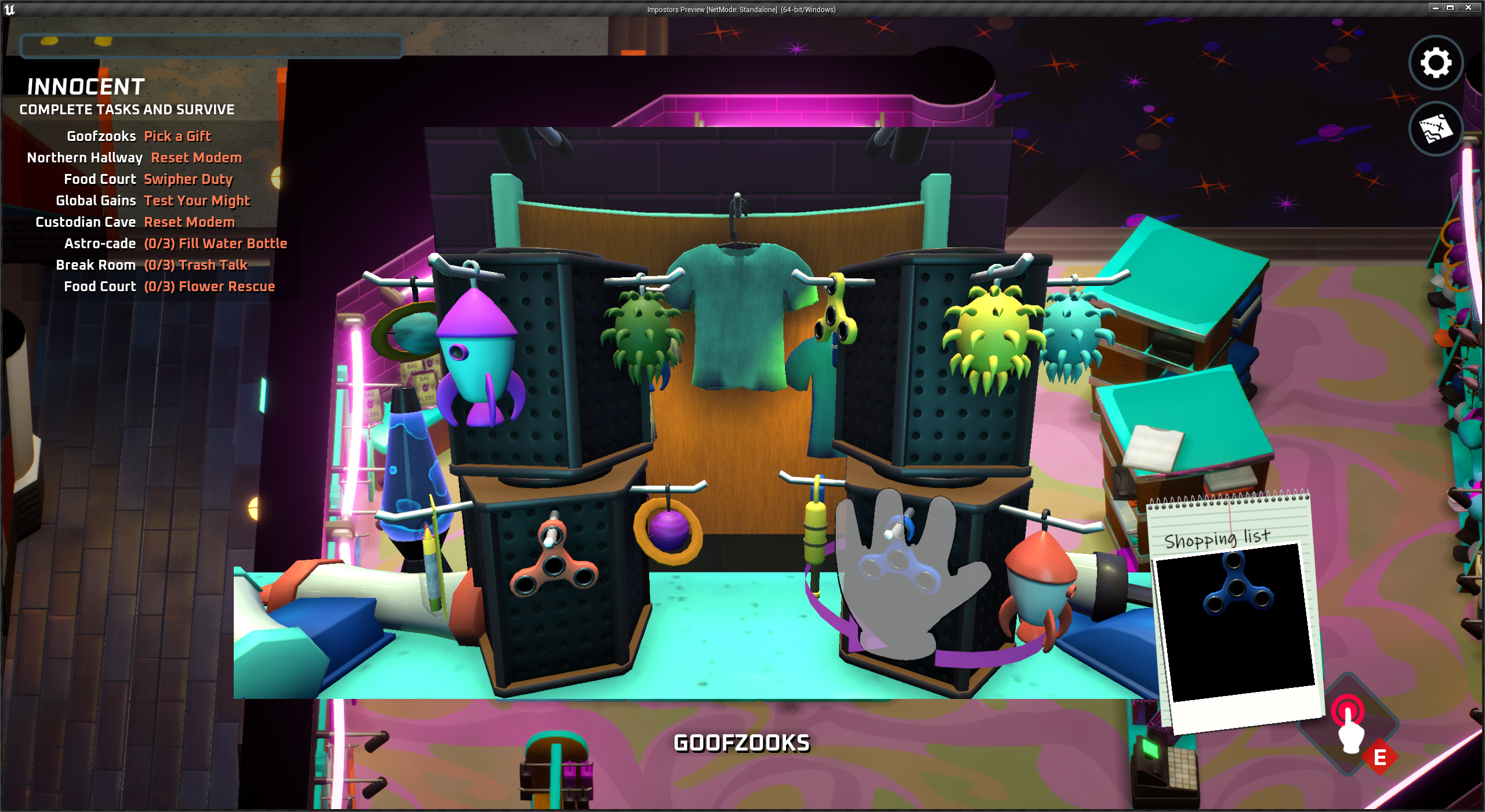
For innocents, the game loop of Impostors is mostly to navigate the map, avoid dangerous situations, and complete minigames. I designed and created the art for most minigames. Many of these were assets pulled from the primary environment, which were upscaled so they held up visually at a larger scale; this kept a strong sense of immersion within the world.
asset library
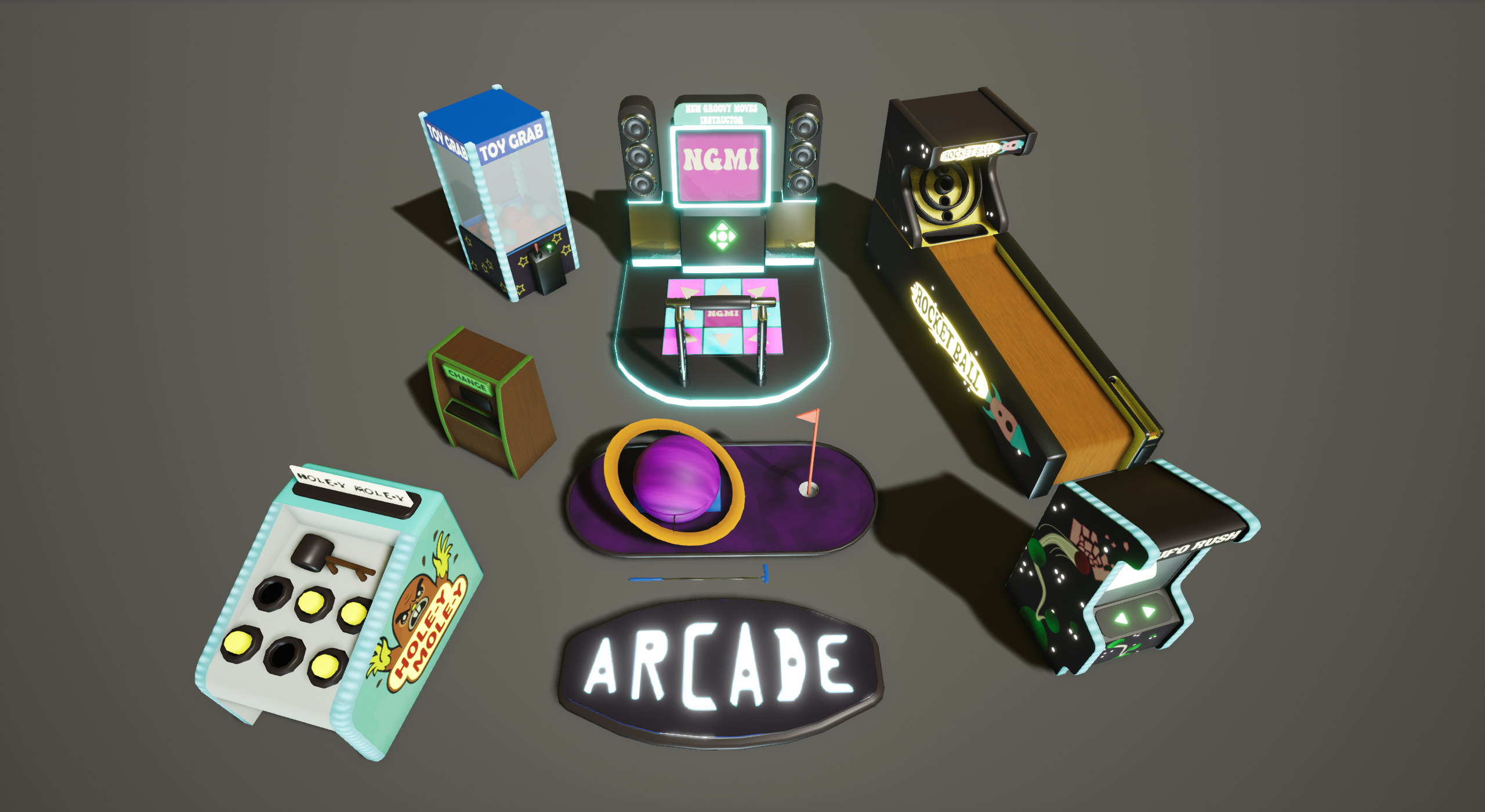
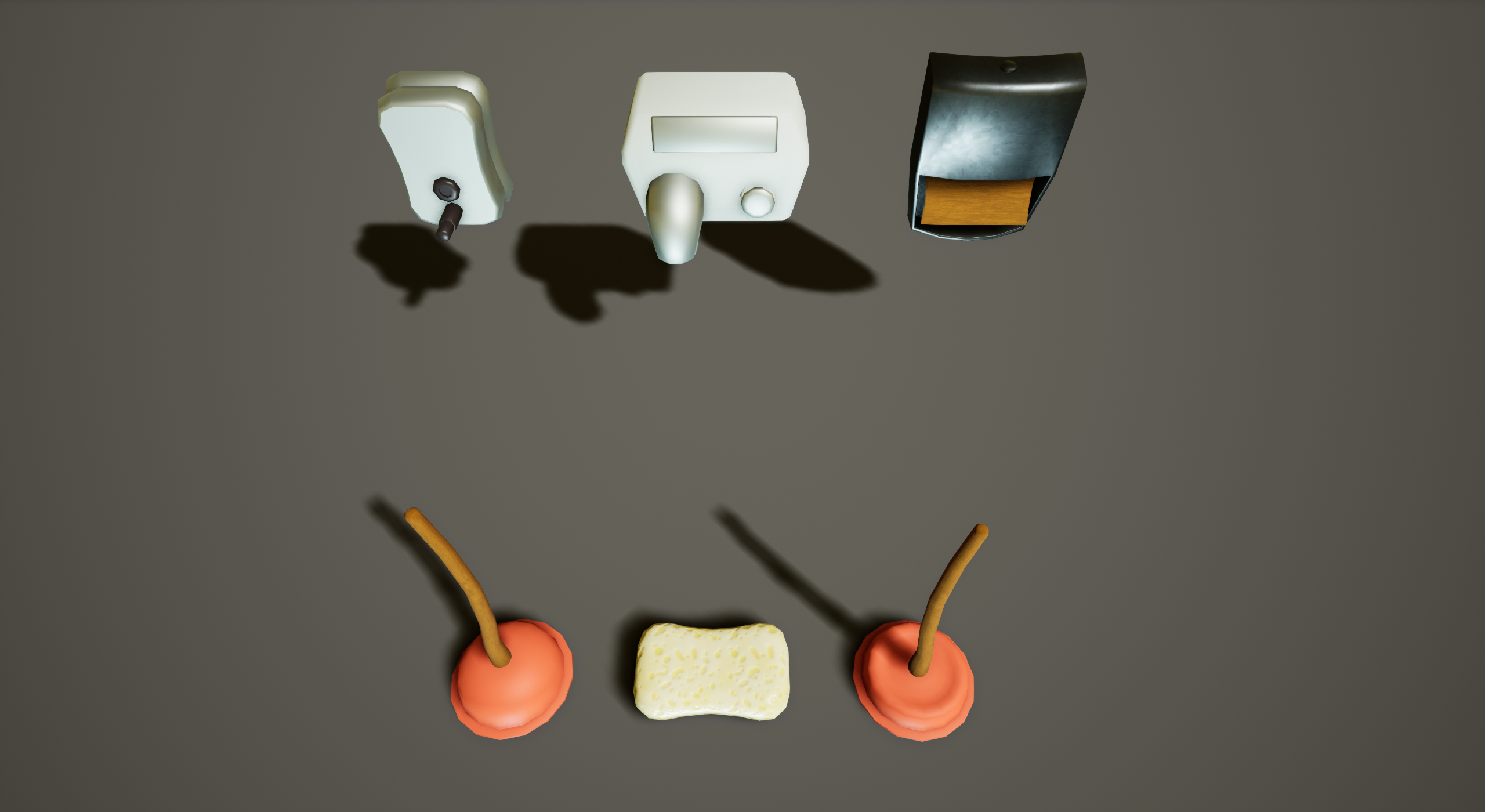
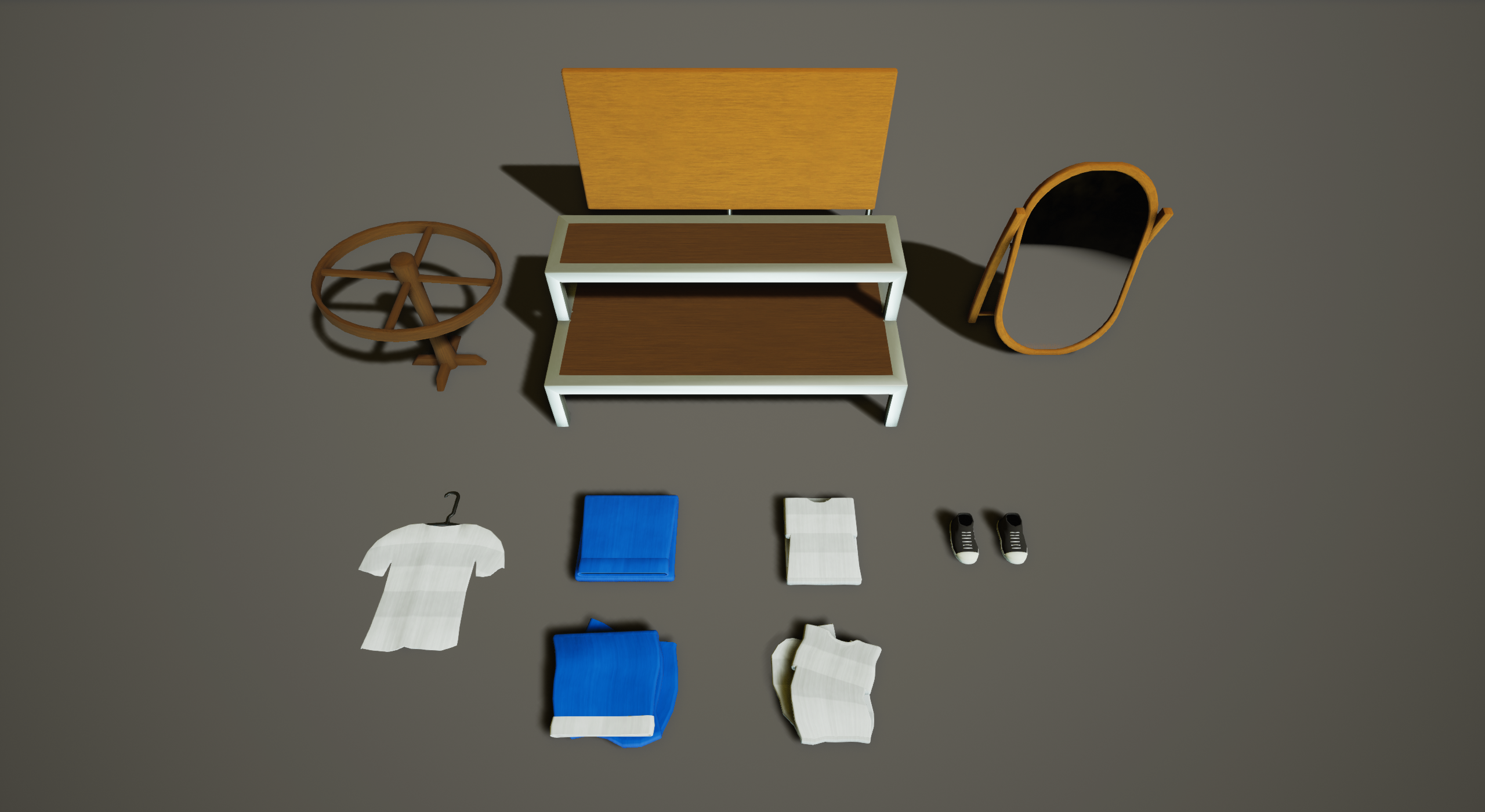
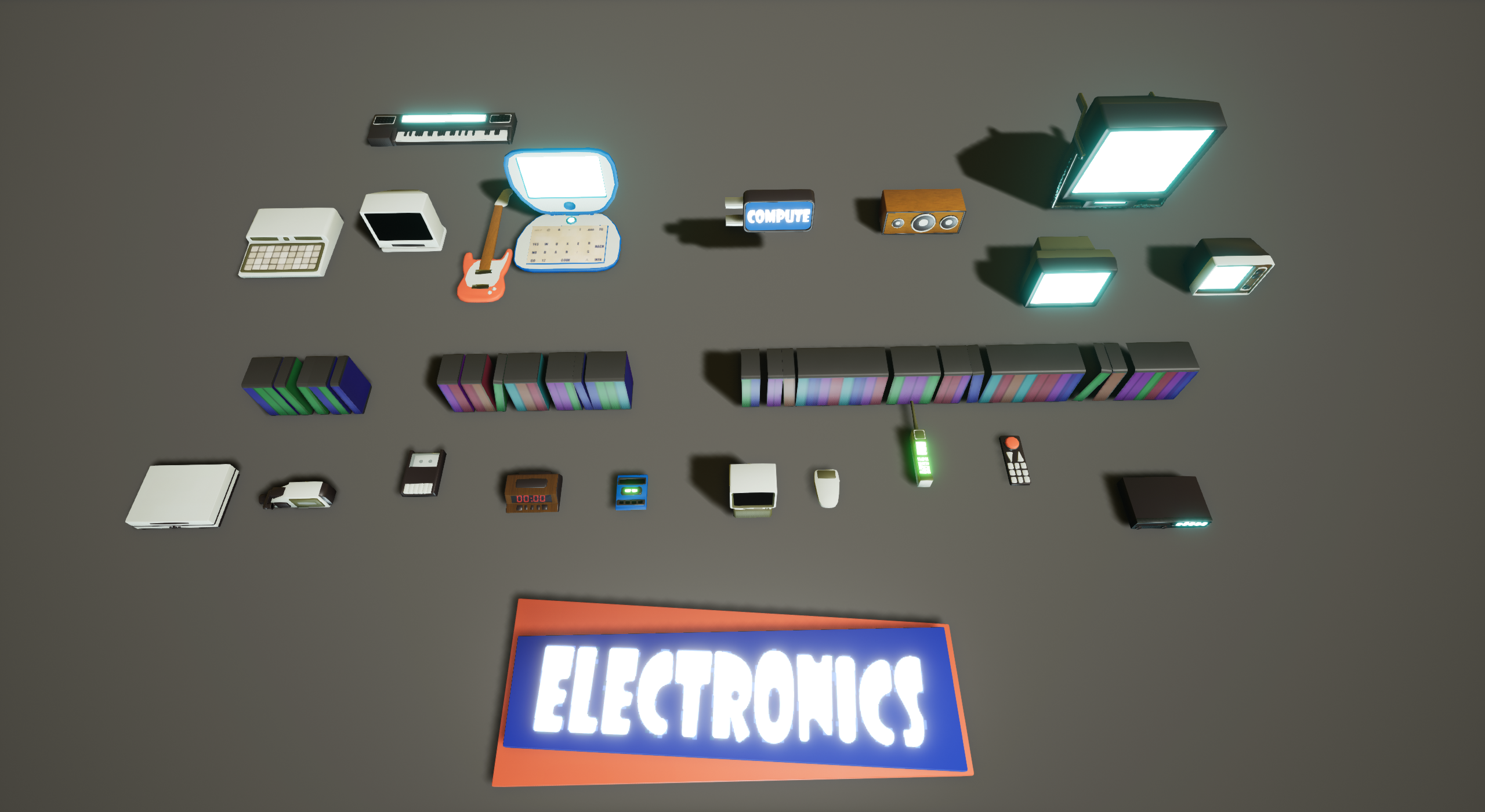
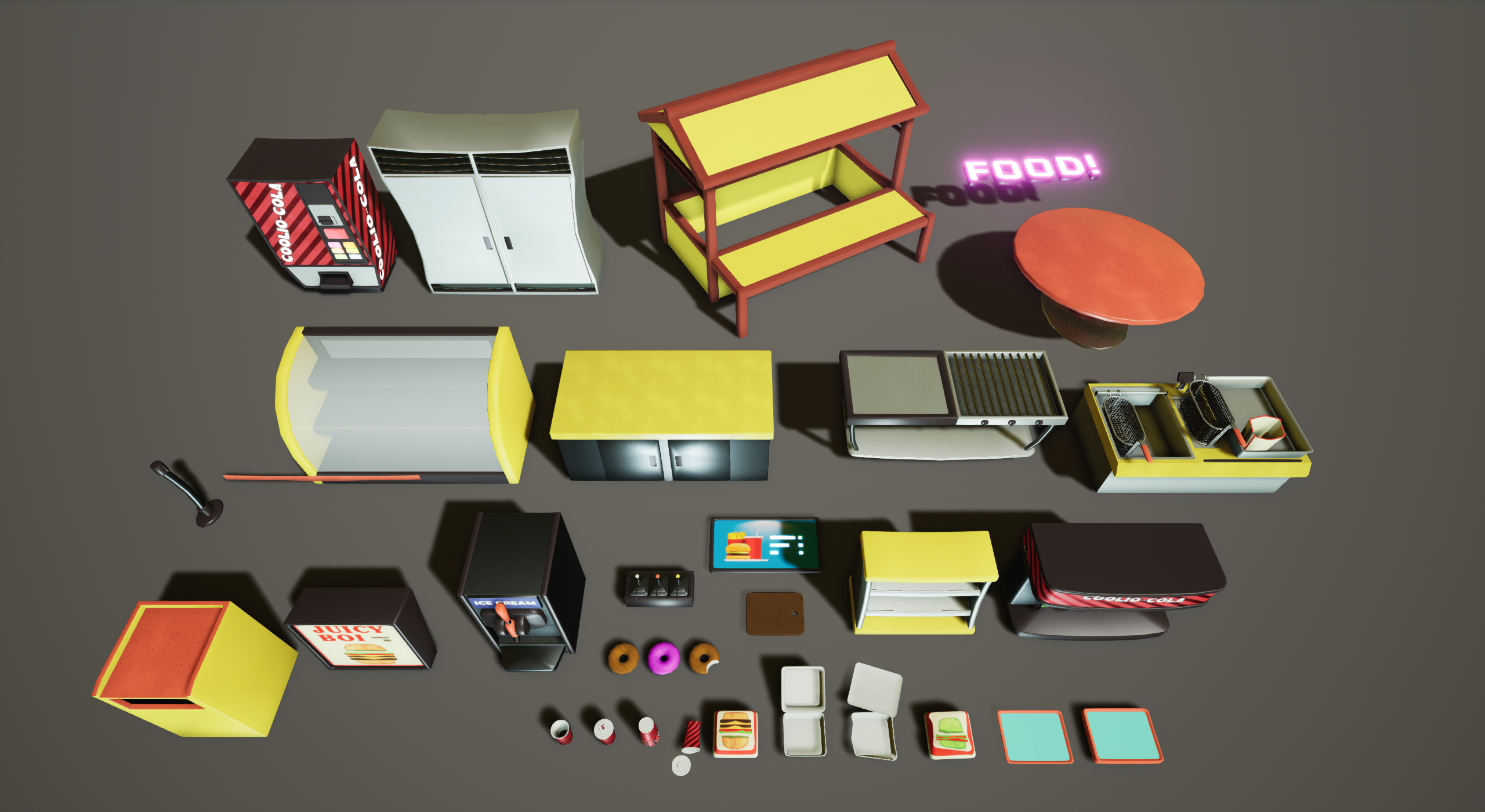
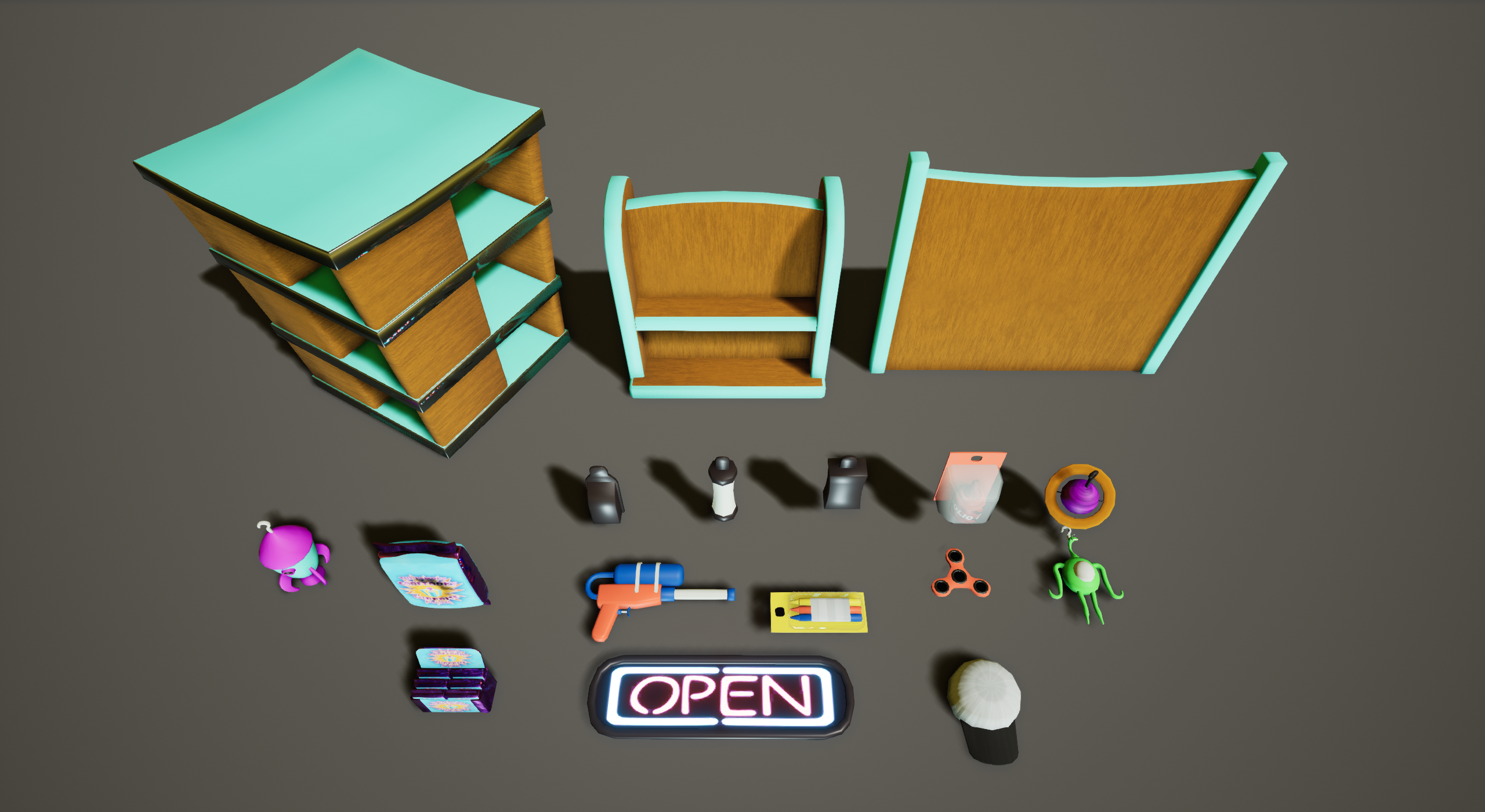
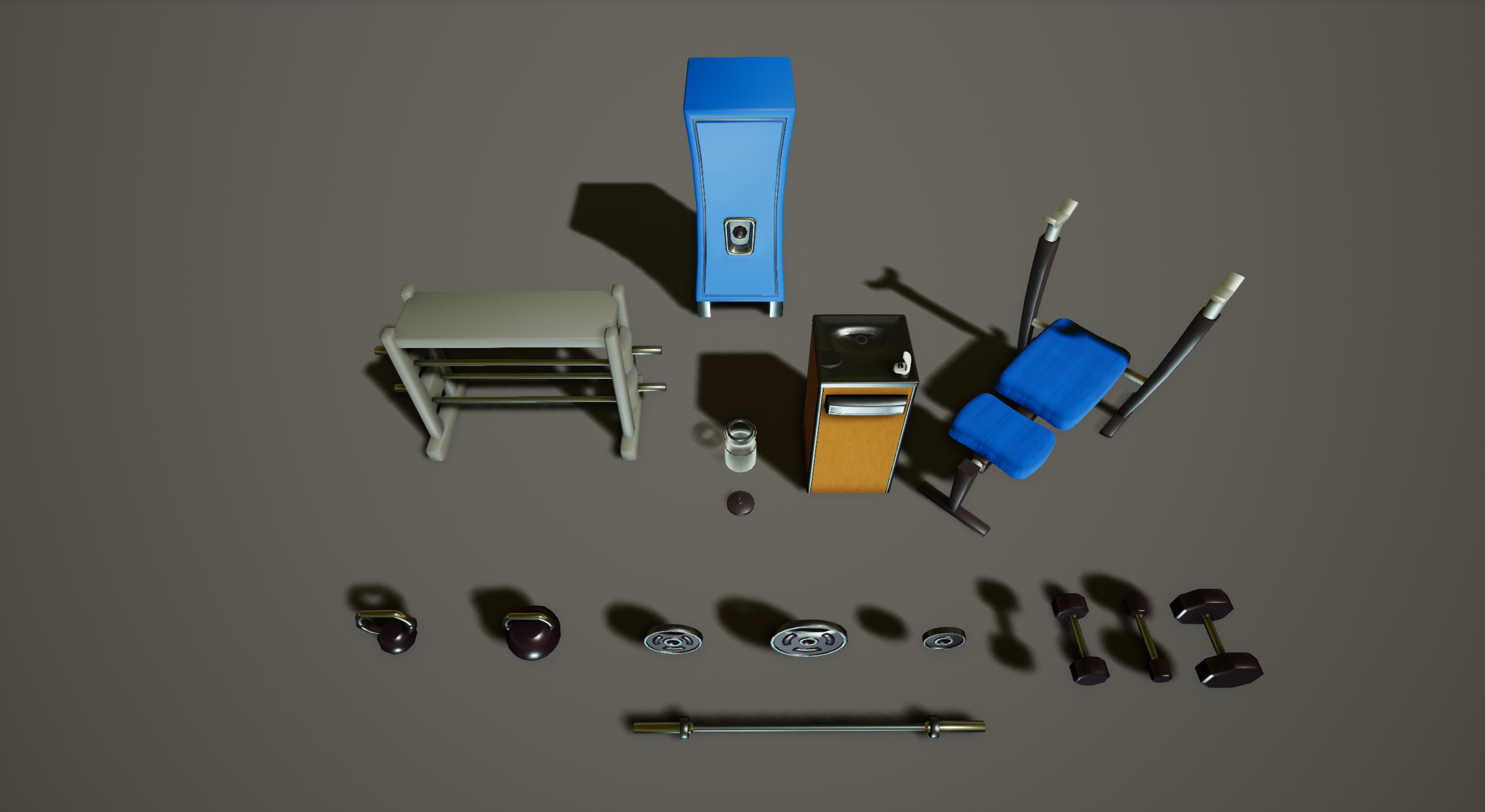
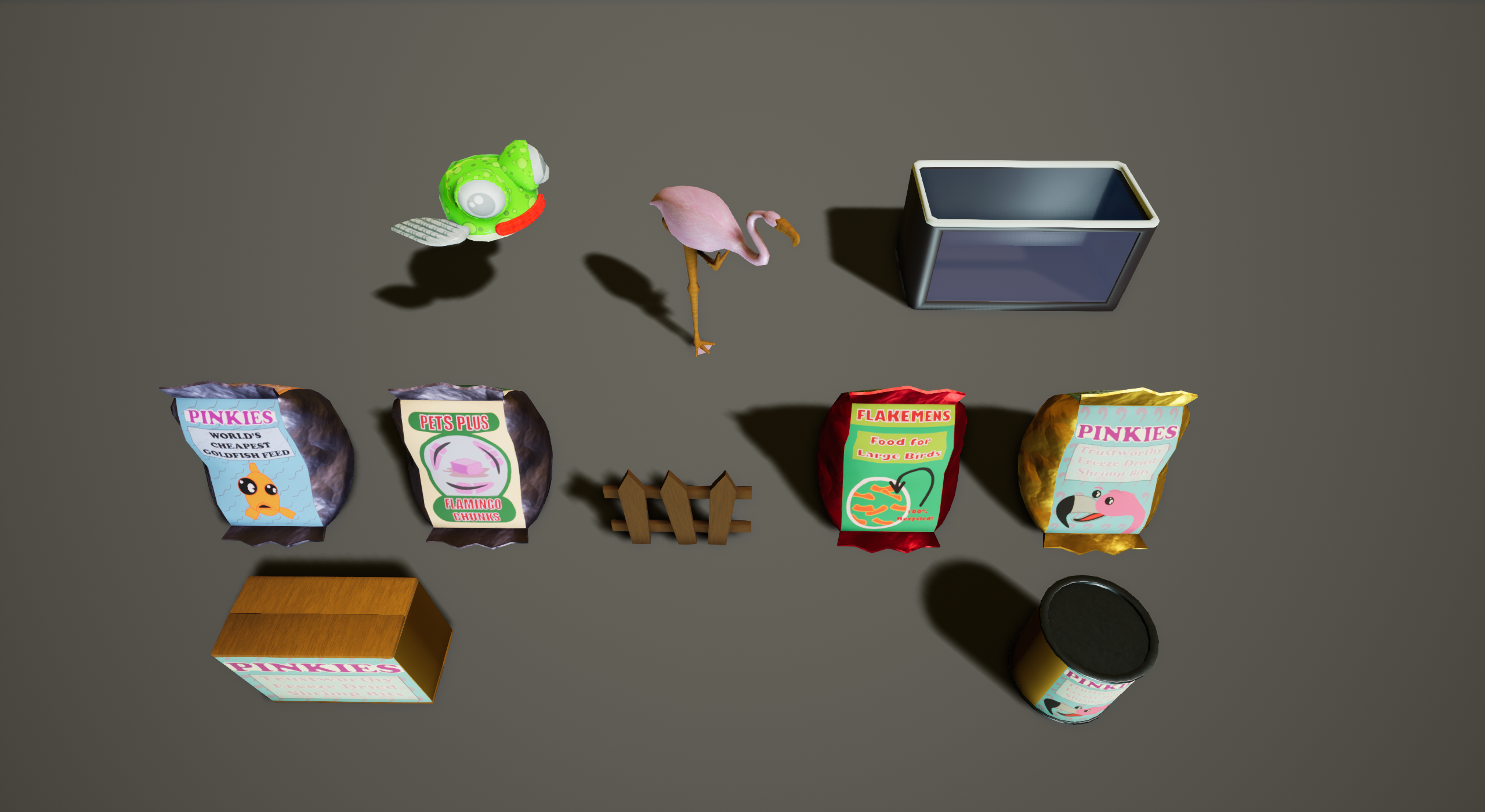
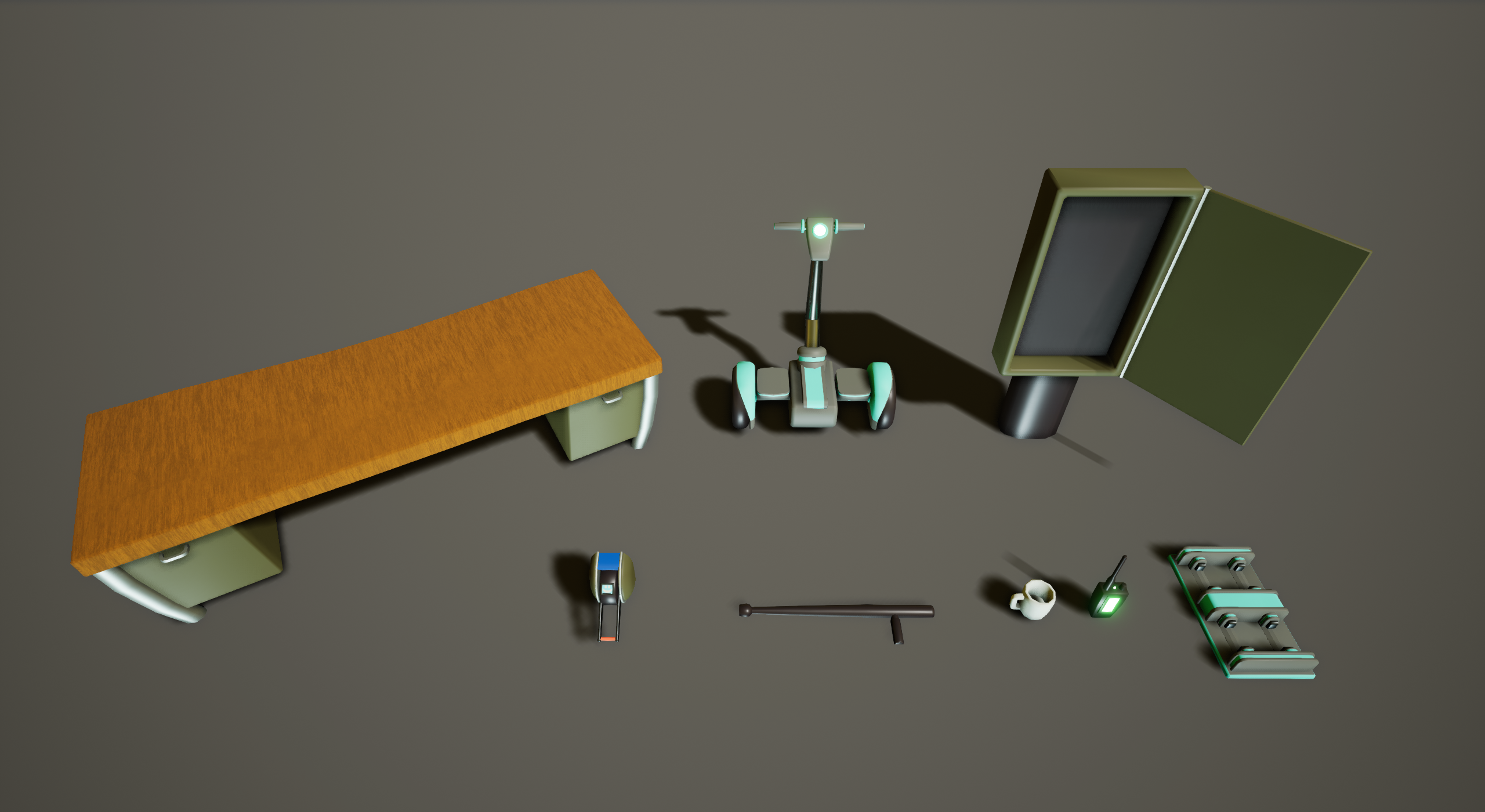
As mentioned above, I was the only artist working on Impostors for several months. Naturally, this lent to me creating quite the catalog of assets, as seen above.
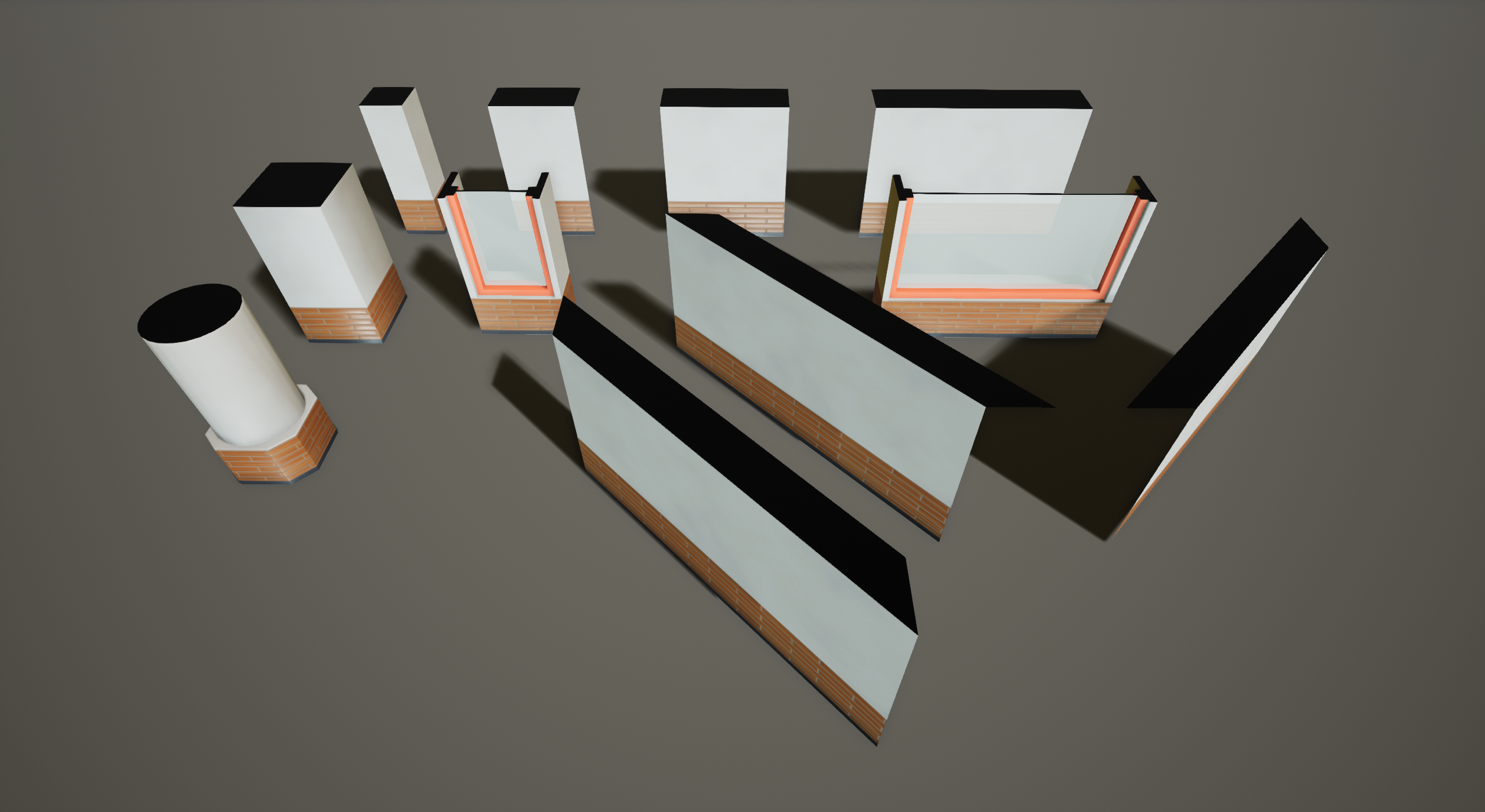
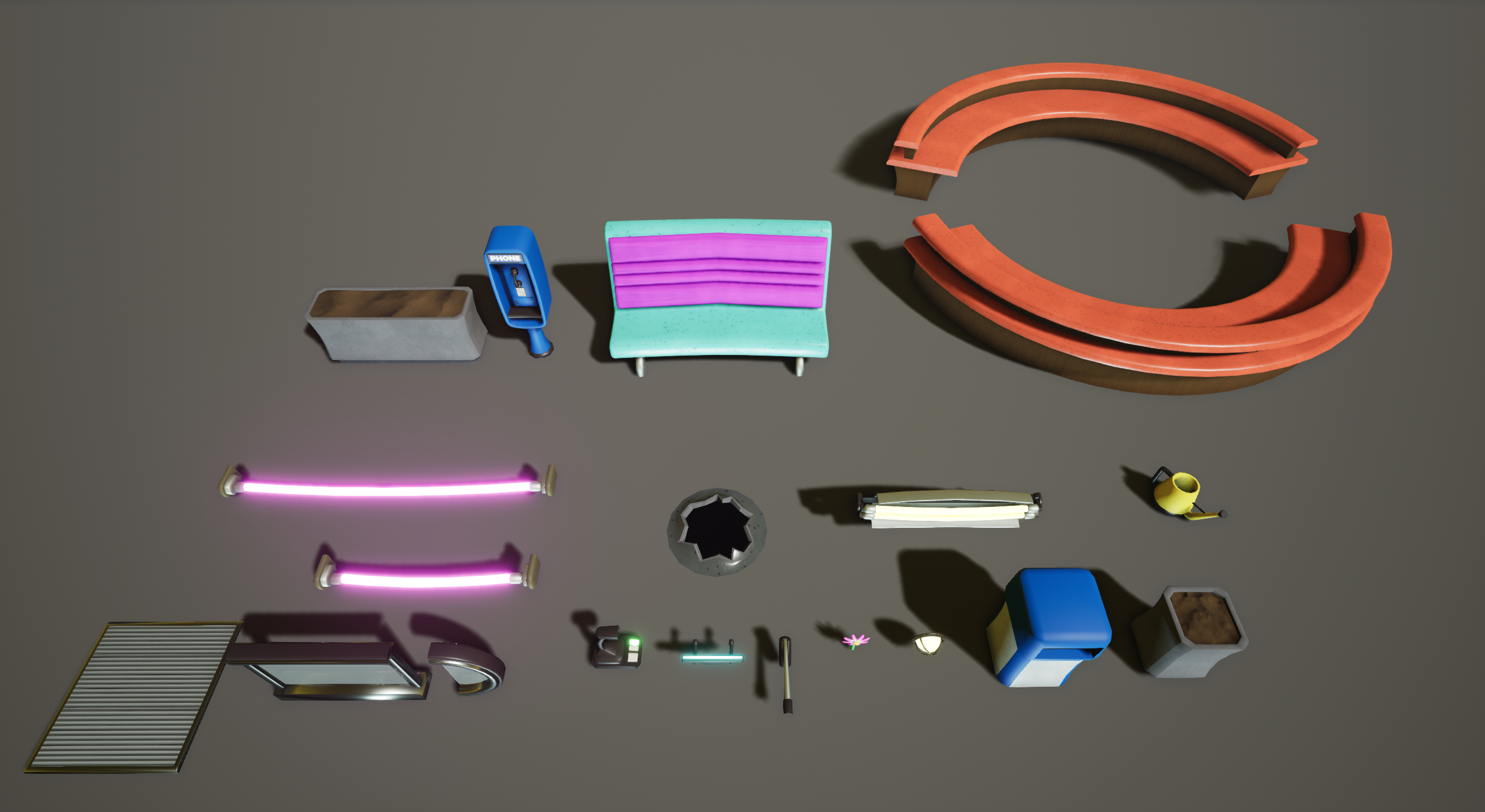
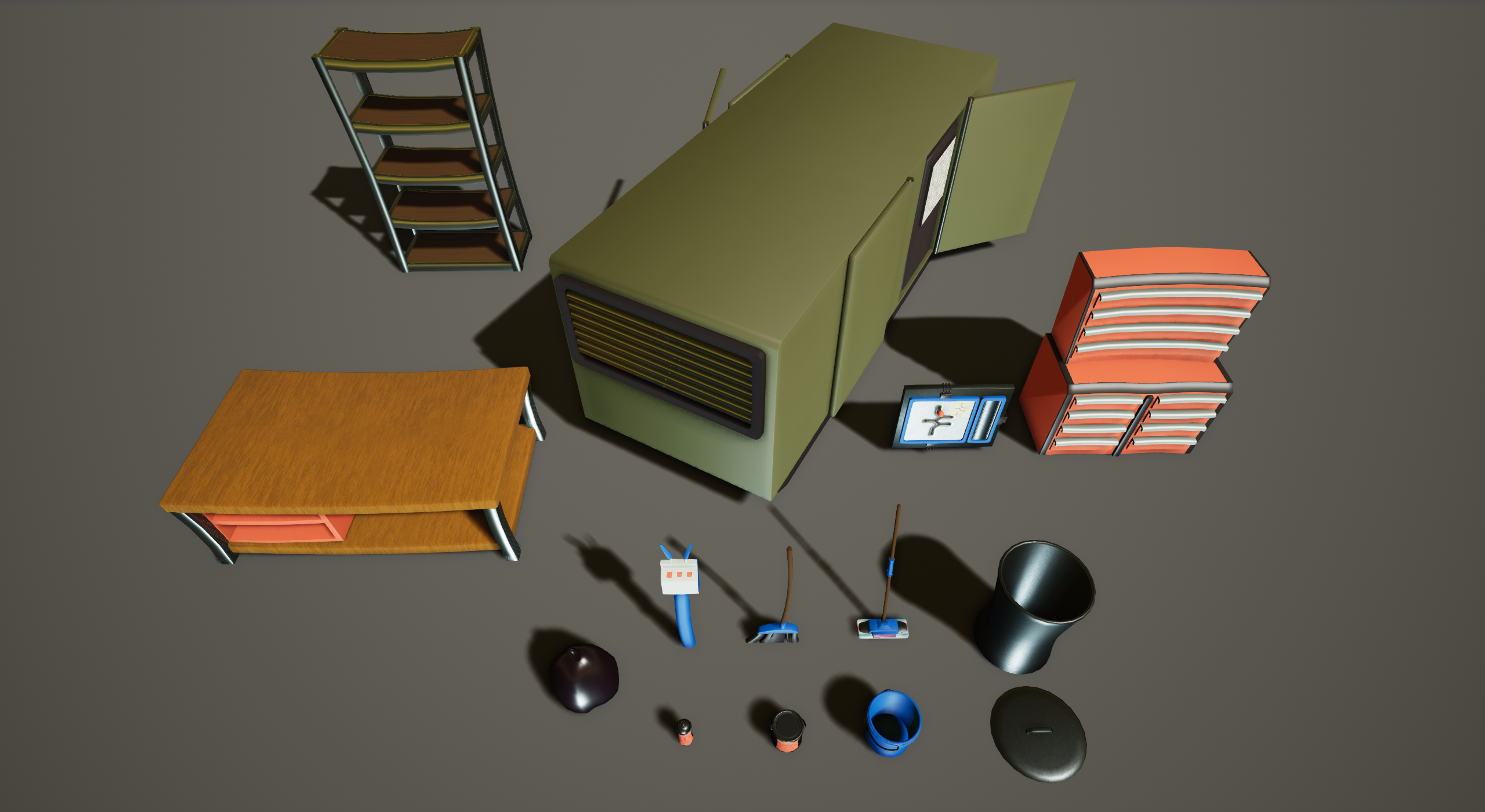
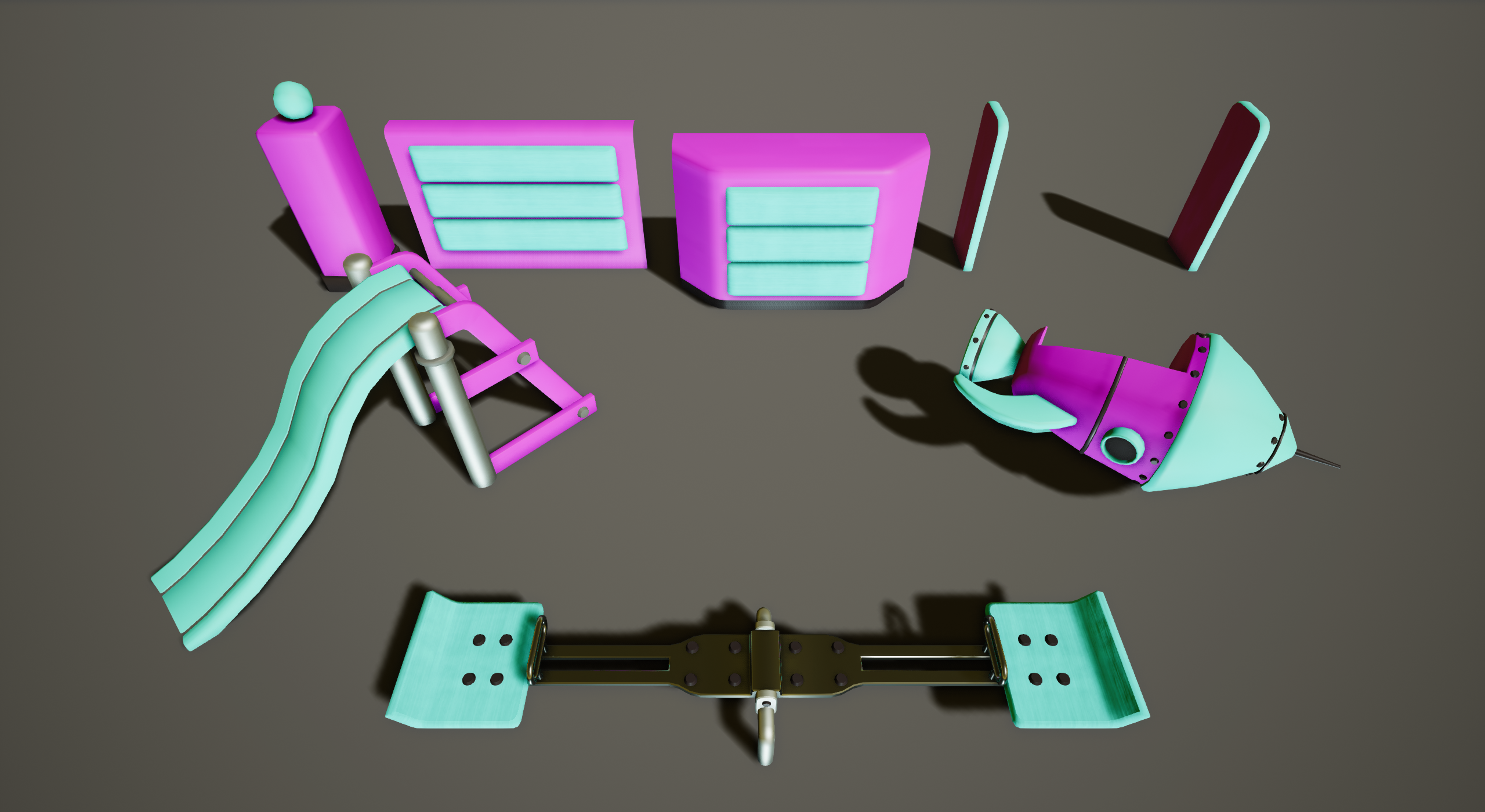
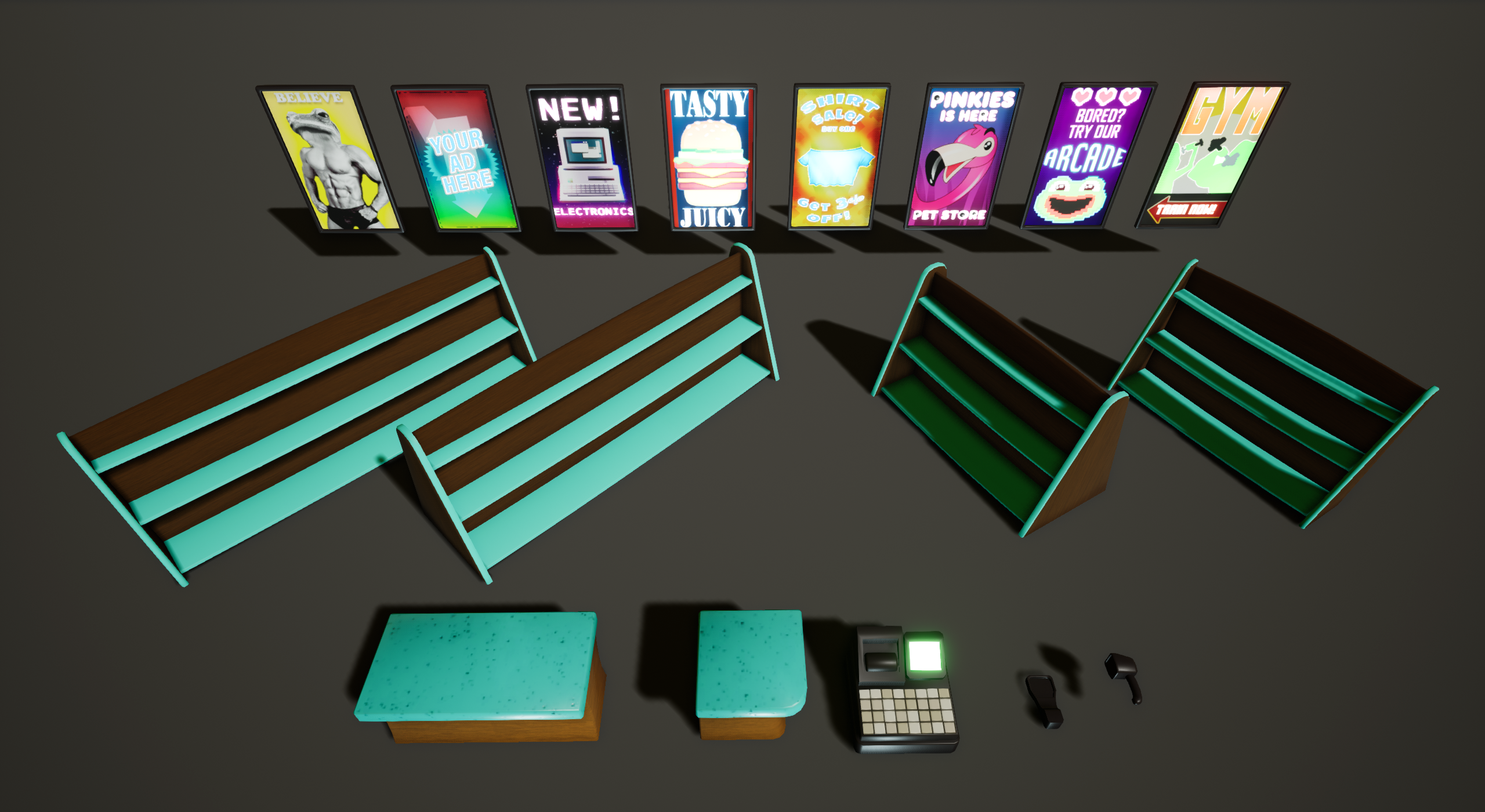
I had two primary focuses while creating this artwork. 1) Performance: We initially wanted Impostors to run on low-end hardware, so I set a hard polygon and texel density cap for myself. 2) Art style: The client wanted a cartoony, 80s-inspired bright, and funky look.
process
Now, the moment you've all been waiting for: the documentation. Unfortunately, I wasn't able to grab the detailed game design documents I created, but I was allowed to grab the level creation documentation.
If you'd like to know more about the creation of the levels and environments of Impostors, or want to see specifics, enjoy the PDF above.